
Open Social Summit
How the UN Is building a global knowledge network: Community Collaboration and AI at SparkBlue.org
.jpg)
At the Open Social Summit Gayan Peiris delivered one of the most forward-looking sessions of the event. As Head of Data, Technology and AI at UNDP he works across a vast global network that spans more than 190 countries. His talk focused on SparkBlue, UNDP’s platform for global collaboration, and the role of human-centered AI in transforming how organizations learn and act at scale. Gayan offered a clear message. Knowledge alone is not enough. The real value comes from turning that knowledge into living intelligence that communities can use to solve complex challenges together.
Gayan opened with the reality many global organizations face. Teams collect enormous amounts of information. Reports, evaluations, research briefs and policy notes flow across departments and countries. Yet much of this knowledge remains static. Staff members may not know where to find it or may not realize it already exists. Valuable insights disappear inside shared drives or outdated platforms. As a result, people repeat work, miss opportunities or make decisions without the benefit of past experience. UNDP needed a way to connect expertise in a more dynamic and accessible way.
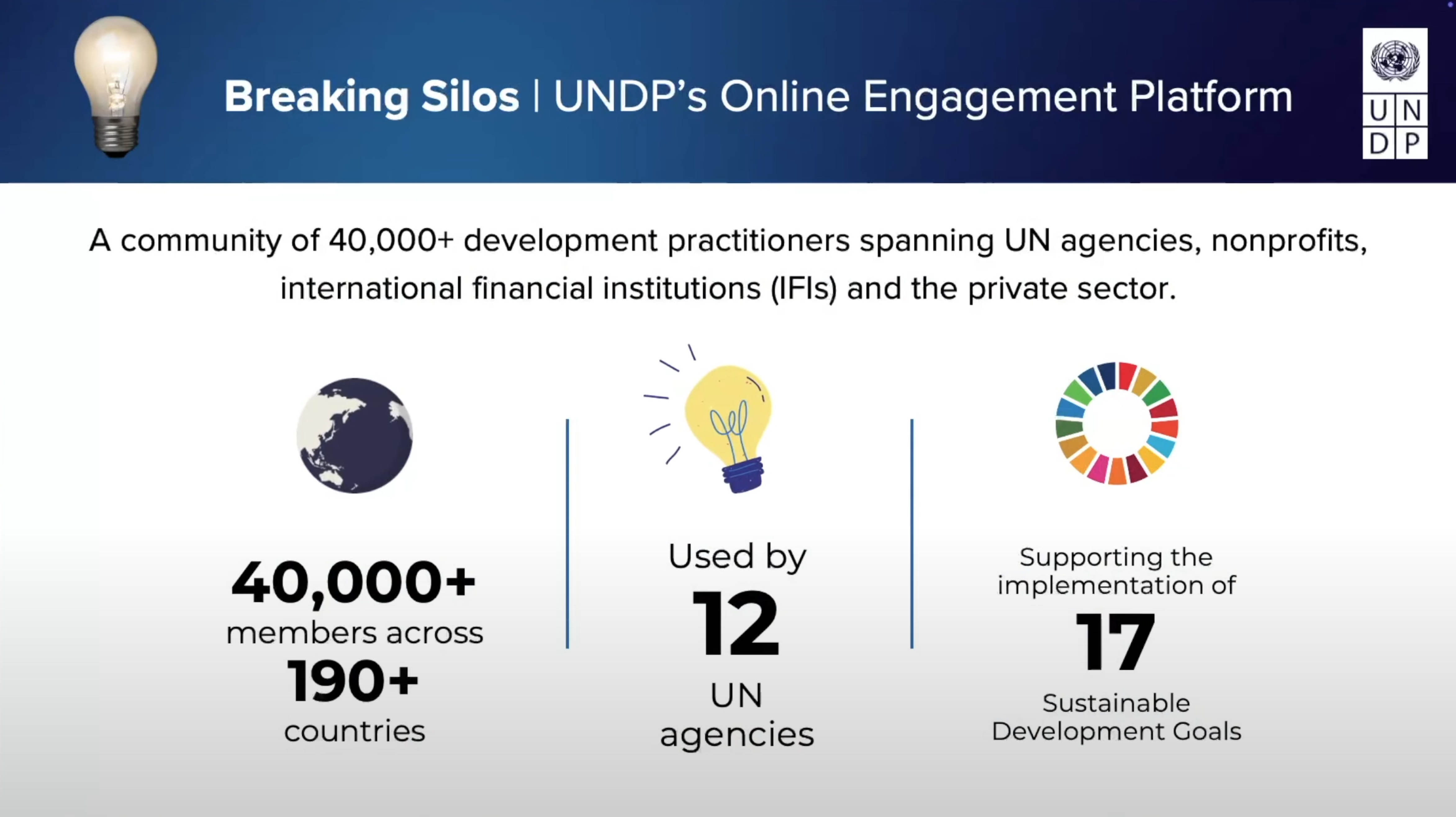
SparkBlue was created as part of that solution. It brings together more than 40,000 members, including UN staff, policymakers, researchers and civil society partners. The platform supports discussions, consultations and knowledge exchange. Gayan explained that SparkBlue has become a central space for collaboration across UNDP’s global network. Yet even with such an active platform the challenge remained. People needed guidance to navigate the growing volume of content. They needed a way to understand what matters and how different ideas connect.
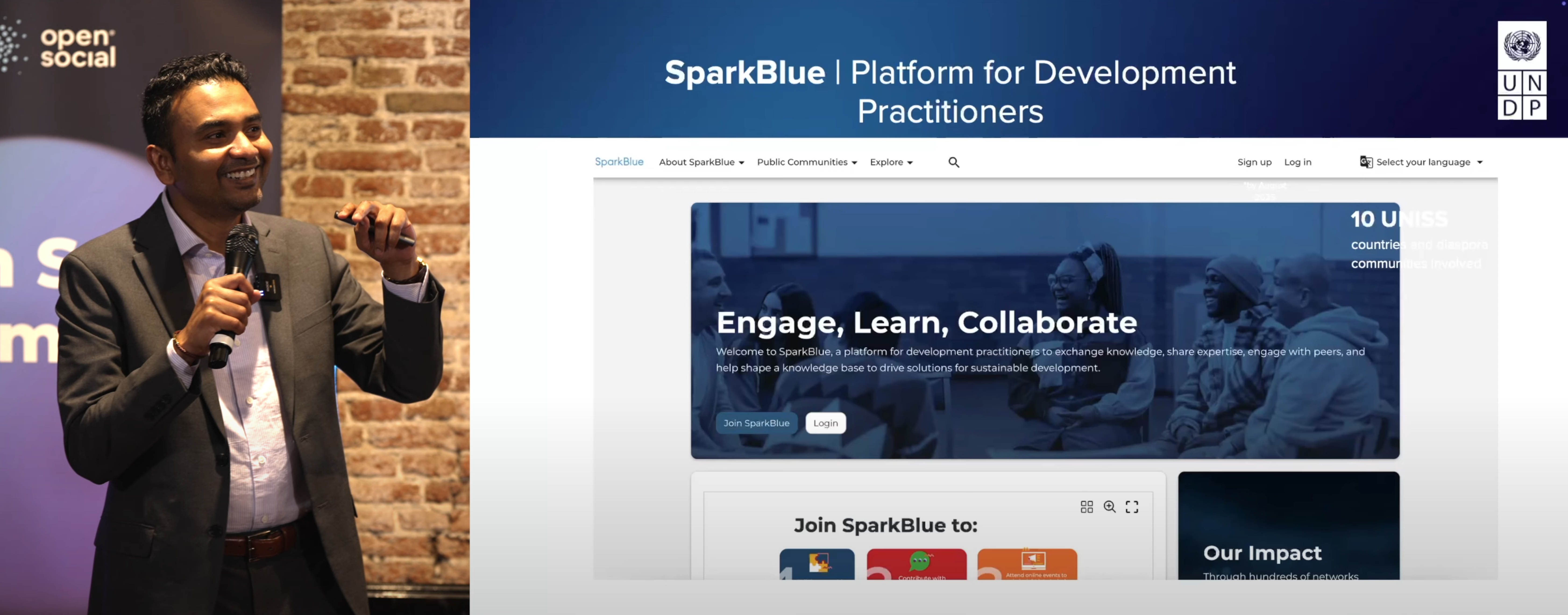
This is where human-centered AI enters the picture. Gayan stressed that AI must support people rather than replace them. It should help teams discover relevant insights and reduce the friction that slows down collaboration. UNDP began exploring how AI can assist with summarizing documents, linking related content and identifying patterns that humans might overlook. Gayan described how these tools are being designed with a strong focus on trust, transparency and ethical standards. In global development work, trust is essential. AI must protect sensitive data and operate in ways that people can understand and feel comfortable with.
One of the examples Gayan shared was how AI can help turn a long report into a short summary that highlights key insights. Staff working on tight deadlines often do not have time to read every document. Summaries help them grasp the essential messages quickly and decide whether they need to explore further. Another example involved connecting related projects or discussions. When teams can see how one initiative in Asia relates to another in Africa, they can learn from each other and avoid duplicating work. AI supports this by surfacing relationships between topics and making connections visible.
Gayan also spoke about the importance of language. Global organizations work across many languages which can create barriers to collaboration. AI-supported translation and semantic analysis help bridge these gaps. They allow people to access content regardless of the language in which it was originally written. This makes collaboration more inclusive and opens doors for participation across regions.
A central theme in Gayan’s talk was the idea that AI should enhance the human elements of collaboration. UNDP does not want automated systems making decisions for people. Instead, it wants tools that support reflection, creativity and informed dialogue. For example, AI can highlight which discussions are gaining momentum or which topics require expert attention. It can help moderators manage large communities by identifying posts that need follow-up. These small supports allow human facilitators to focus on creating meaningful engagement rather than administrative tasks.
Gayan explained that this shift from static knowledge to collective intelligence is not only technological. It is cultural. Communities must develop habits that welcome shared learning and transparency. People need to trust that their contributions will be seen and valued. Platforms like SparkBlue support these cultural shifts by giving members space to express ideas, ask questions and build relationships. AI becomes an additional layer that strengthens these interactions without overshadowing them.
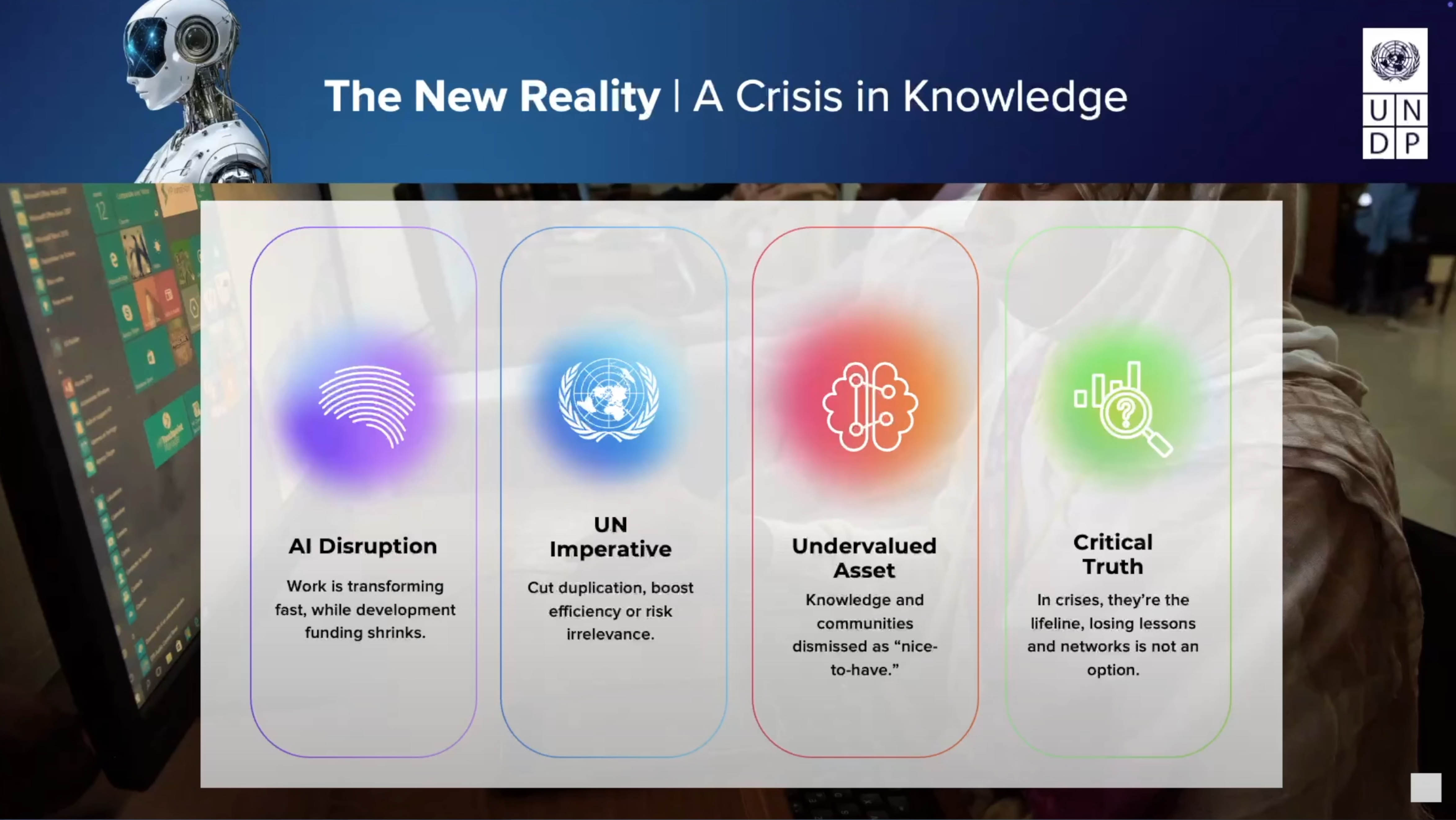
Throughout the presentation, Gayan emphasized the need for responsible innovation. AI must be used carefully, especially in organizations that operate in sensitive contexts. UNDP follows strict guidelines for data protection and ethical AI. Models are trained and deployed in ways that respect privacy and prevent misuse. Gayan noted that protecting trust is essential for participation. If people worry about how their data is used, they will not engage fully. Strong ethics are therefore a requirement for effective collaboration.
Another insight from Gayan was the recognition that global challenges require collective intelligence. Development work involves complex issues such as climate change, governance, inequality, and crisis response. No single team can solve these problems alone. Knowledge must flow across countries and disciplines. SparkBlue and its AI-supported tools create the conditions for this shared intelligence to grow. They help connect the people who have experience with those who need it and ensure that insights move quickly, where they can make a difference.
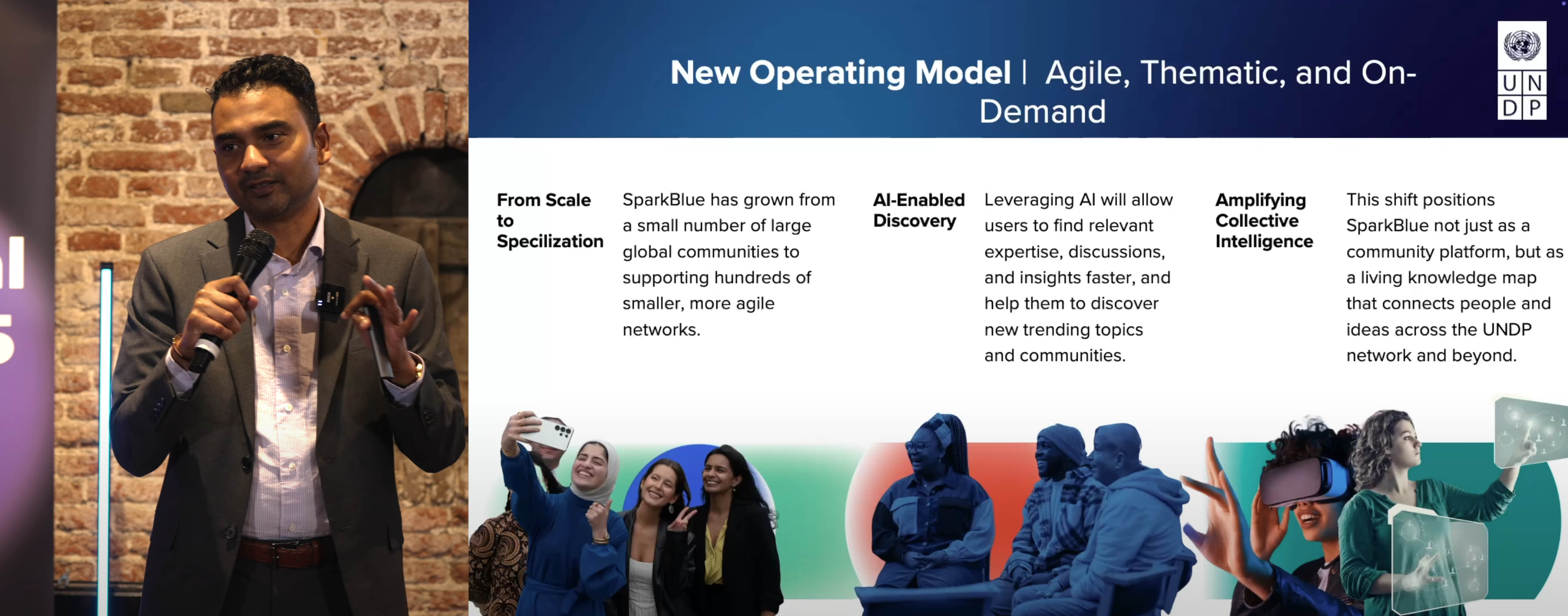
Gayan also spoke about the future direction of this work. AI will continue to evolve and UNDP aims to stay ahead by using it in ways that strengthen rather than disrupt community dynamics. This includes exploring new ways to analyze discussion threads, detect emerging trends or match experts with relevant opportunities. The goal is to create a platform that adapts to the needs of its users and makes it easier for them to collaborate with purpose.
He closed by reminding the audience that technology is only useful when it supports people. It must help communities make better decisions, build trust and create shared understanding. The work at UNDP reflects this belief. AI is a tool for empowerment, not control. It helps bring together the full depth of experience across the global network and turns dispersed knowledge into collective intelligence.
Gayan’s talk stood out as a vision for the next era of collaboration. It showed how human-centered AI can transform the way organizations learn and work together while respecting trust and ethics. For global communities facing rapidly changing challenges, this represents a powerful and hopeful direction.
Related articles
You might find this interesting too.

Connect. Collaborate. Thrive.