
Open Social Summit
The new era of community platforms is here and why collaboration is no longer optional
.jpg)
At the Open Social Summit Taco Potze set the tone for two days focused on the future of digital collaboration. His session introduced a major step forward for Open Social, presented through a new vision and positioning of the company’s platform. The talk combined personal reflection with a clear view of where communities are moving and what organizations need to collaborate at scale.
The next step for the platform had been clear for a while. Organizations no longer work in isolation. Their projects and partnerships cross borders and include many different systems and stakeholders. Taco explained that if digital collaboration wants to keep up with this reality, it needs a foundation that can support more than posts and discussions. It needs structure, integrated tools, clear governance and a strong focus on data protection. The new Community Collaboration Platform is built around these ideas and is guided by a simple belief. People get better results when they work in a connected environment that respects their privacy and gives them real ownership of their data.
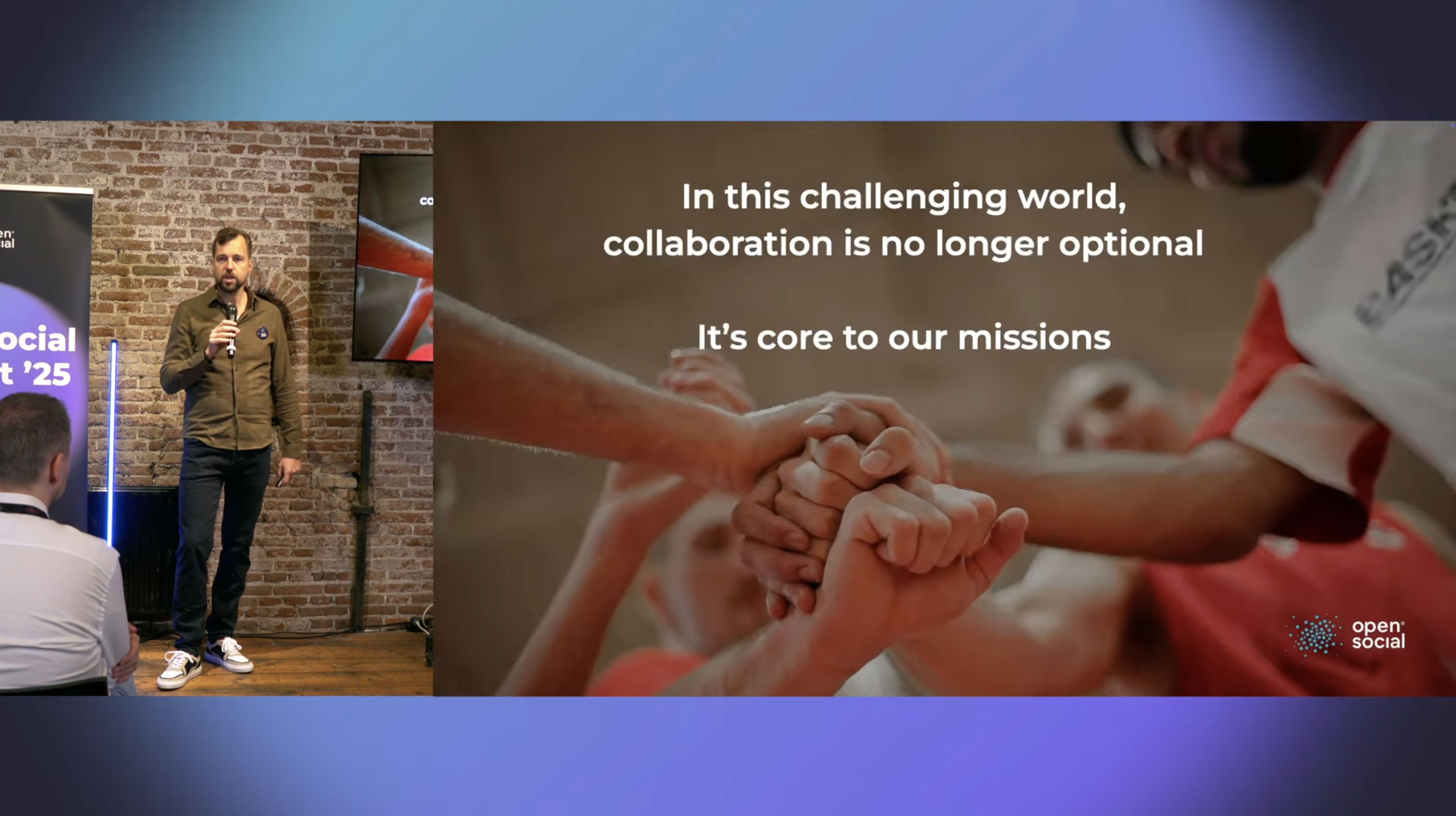
Taco shared several examples from existing customers who have already moved in this direction. One of the strongest was the partnership with the European Commission. What began as an initiative to modernize knowledge sharing grew into a vision for a broader digital ecosystem. The Commission needed a platform that could support strategic collaboration between departments and projects. They needed secure spaces to work together, manage documents and run communities that align with demanding standards for accessibility and data control. The new platform supports all of this by combining community tools with document collaboration, analytics and integrations with internal systems.
Another example came from the WE BUILD Consortium. This network unites more than 180 organizations across the continent that are working on the European Digital Business Wallet. The scale of this collaboration is enormous and Taco explained how Open Social now provides the shared communication and governance layer that keeps this work together. It shows that digital collaboration is no longer one community that works on its own projects. It is multiple communities connected through one ecosystem that supports both dialogue and coordinated action. This shift is a key part of the new direction for the platform.
The second theme of the talk focused on data sovereignty. Taco explained that many organizations want more than secure hosting or simple privacy features. They want full control over their data and infrastructure. They want to avoid commercial lock-ins and protect the interests of their members. Open Social is built in Europe and follows the standards set by the EU. The company works with partners who share this mindset and invest in open technology. The goal is to give every organization a platform they can trust with sensitive information and long-term collaboration. Taco stressed that this is not only a technical choice but a belief in responsible digital development.
Taco also talked about the major investments in the new document collaboration suite and the analytics engine called Lumina Insights. The suite allows users to create, edit and organize documents directly inside the platform. Everything stays in context and remains part of the shared project. Lumina Insights helps organizations understand how engagement grows, what drives participation and which activities shape real outcomes. These two additions move Open Social beyond the idea of a community platform and into the space of a collaborative work environment.
Another part of the future vision is Gaia AI, a set of built-in assistants that support content moderation, summarization and search. Taco was careful to mention that AI should not replace human judgment or community leadership. Instead it should help reduce noise, surface useful information and give teams more time to focus on meaningful interactions. He outlined how these assistants follow strict standards for safety and transparency and are designed to protect the trust of community members.
Toward the end of the talk Taco returned to the core idea that guided this transformation. Collaboration should not happen in silos but across connected communities. The platform aims to make this shift possible by combining communication, documents, analytics and integrations in one environment. This reflects how organizations work in real life. They do not move from one tool to another for every part of their process. They need a space where projects, people and data stay together and help them reach their shared goals.
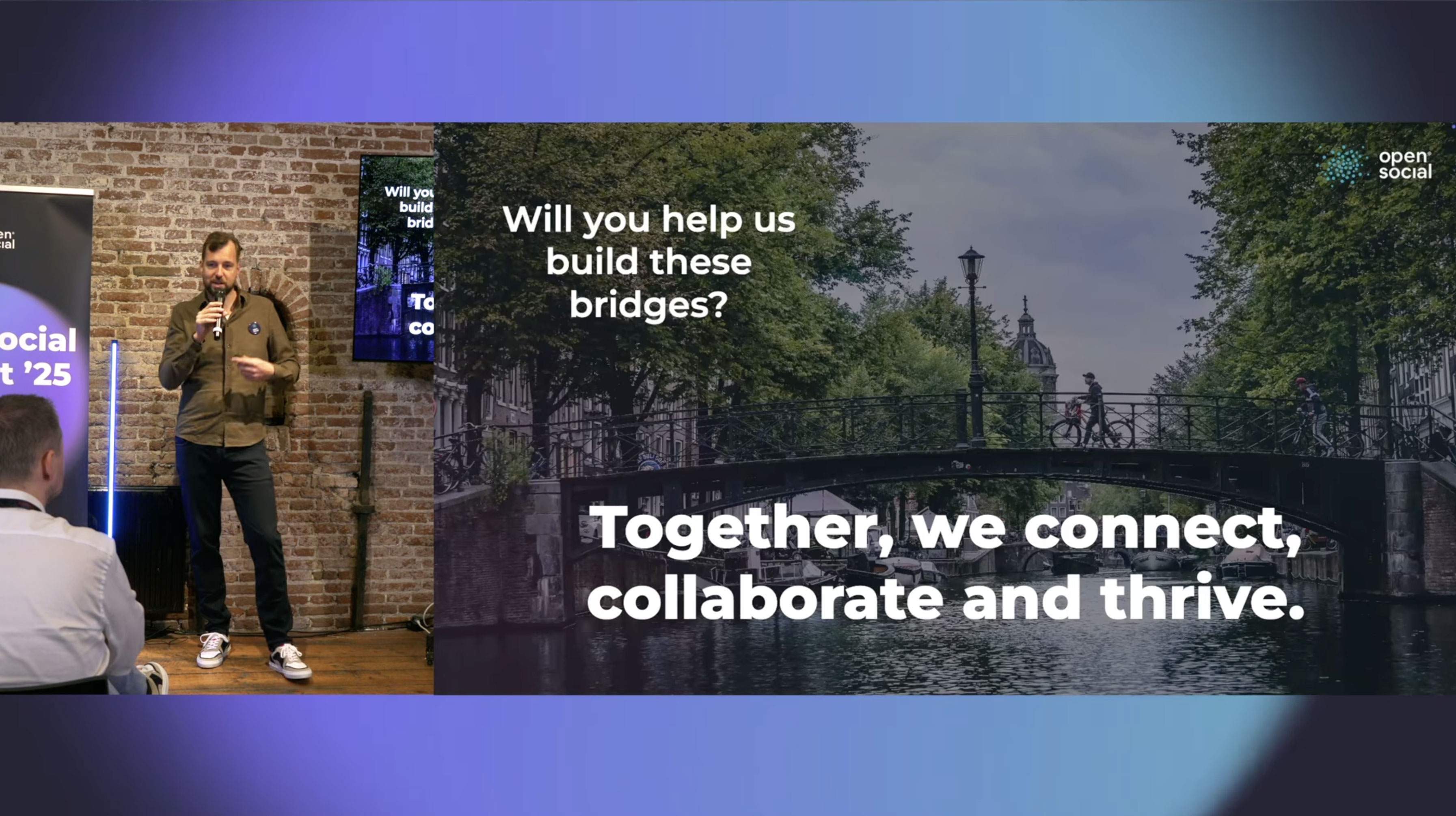
Taco closed by thanking the customers and partners who contributed to the vision. He noted that the new platform is not a finished product but a foundation for ongoing innovation. It invites organizations to collaborate more openly and to explore what becomes possible when knowledge, people and systems align. The Summit itself was an example of that spirit. It brought together leaders from around the world who are committed to building stronger communities and better ways of working.
The talk made clear that the future of collaboration will be shaped by trust, interoperability and meaningful human connection. Technology alone is not enough. It succeeds when it supports people and enables them to build something bigger together. Taco’s message echoed throughout the event and set the course for where Open Social is heading next.
Related articles
You might find this interesting too.

Connect. Collaborate. Thrive.