
Open Social Summit
Three new products launched: Engagement Studio, Gaia AI and Connection Hub
.jpg)
At the Open Social Summit, Moritz Arendt offered a clear and forward-looking view of how community platforms are evolving. As Head of Product at Open Social, he introduced three major developments that form the foundation of the company’s product direction. Engagement Studio, Connection Hub and Gaia AI work together to support deeper participation, stronger integrations and smarter collaboration. Moritz’s talk explained why these innovations matter and how they reflect the changing needs of organizations that depend on communities to drive impact.
Moritz began by highlighting a shift that many teams experience. Communities have grown from simple discussion spaces into structured environments where people learn, work and coordinate. Projects need workflows. Members expect personalized experiences. Organizations want platforms that connect with existing systems and support clear outcomes. The product strategy of Open Social responds to this reality by focusing on three pillars. Engagement, integration and intelligence.
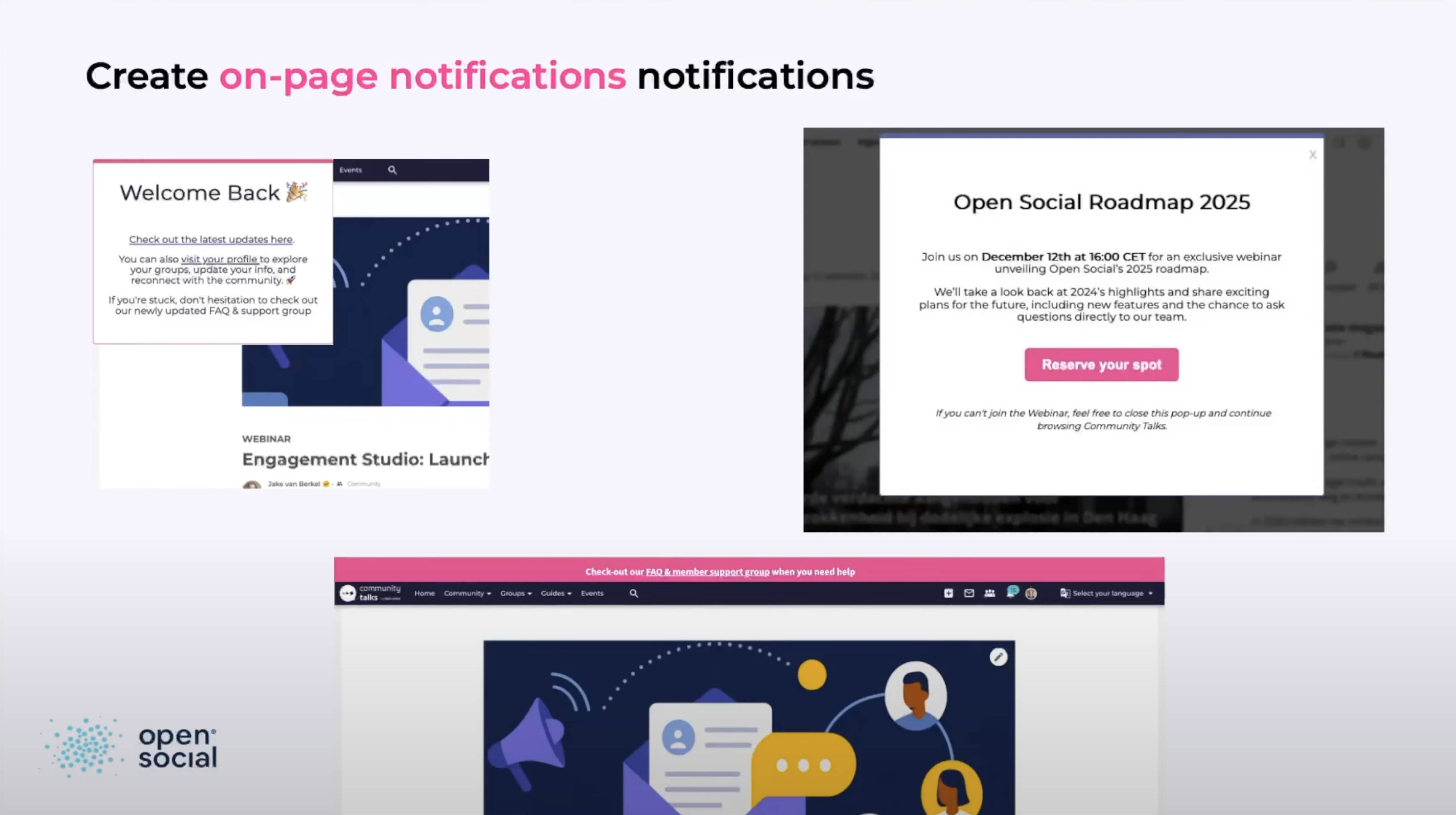
The first pillar, Engagement Studio, gives community managers a more powerful way to reach and activate members. Moritz explained that engagement should not be left to chance. Communities thrive when people receive the right message at the right moment. Engagement Studio allows teams to design communication journeys that follow this logic. Managers can send welcome flows to new members, reminders to participants who have been inactive or tailored messages to people who joined a specific project. These journeys help guide members into deeper involvement and make sure they do not lose their connection with the community.
Moritz emphasized that Engagement Studio is not about volume. It is about relevance. Many platforms overload users with generic notifications. This leads to fatigue and reduced participation. Engagement Studio solves this by letting teams shape targeted workflows that support real goals. It helps organizations encourage meaningful activity, sustain engagement and support long-term participation without overwhelming members.
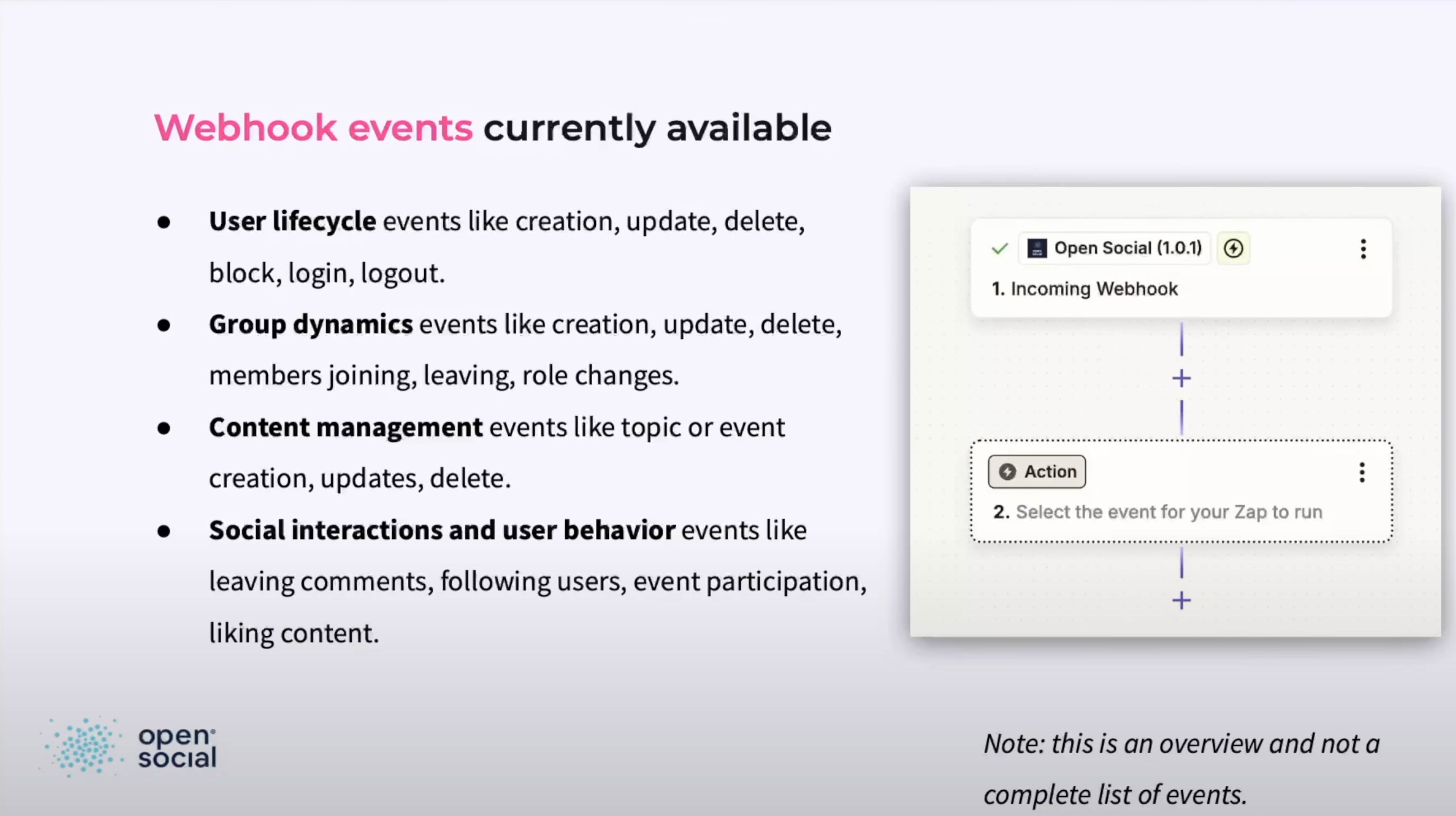
The second pillar is Connection Hub. Moritz described it as the bridge between Open Social and the wider ecosystem of tools organizations rely on. Many teams use CRMs, mailing platforms, data warehouses or automation tools. Without integration, community data becomes siloed. Leadership cannot see the full picture of member activity. Processes require manual work. Connection Hub addresses this challenge by offering a central interface that connects the community to existing systems. For example, membership data can sync with a CRM, events can connect to external calendars, or engagement metrics can flow into analytics tools.
By bringing these systems together, Connection Hub helps organizations create a more connected digital environment. Moritz explained that this approach allows Open Social to function as part of a broader workflow rather than an isolated platform. It reflects the way organizations operate in real life, where information moves across teams, tools and processes. Integration becomes the foundation for better strategy and clearer decision-making.
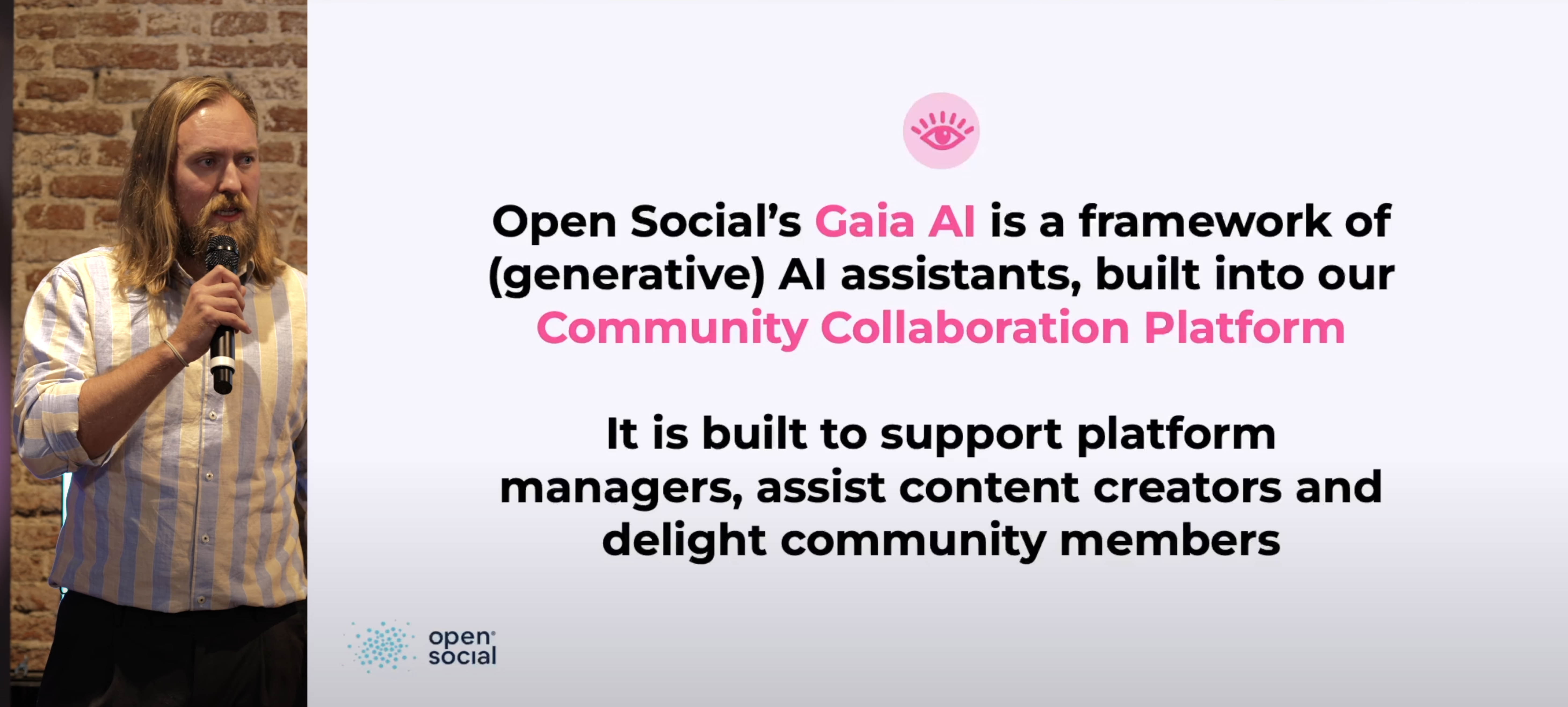
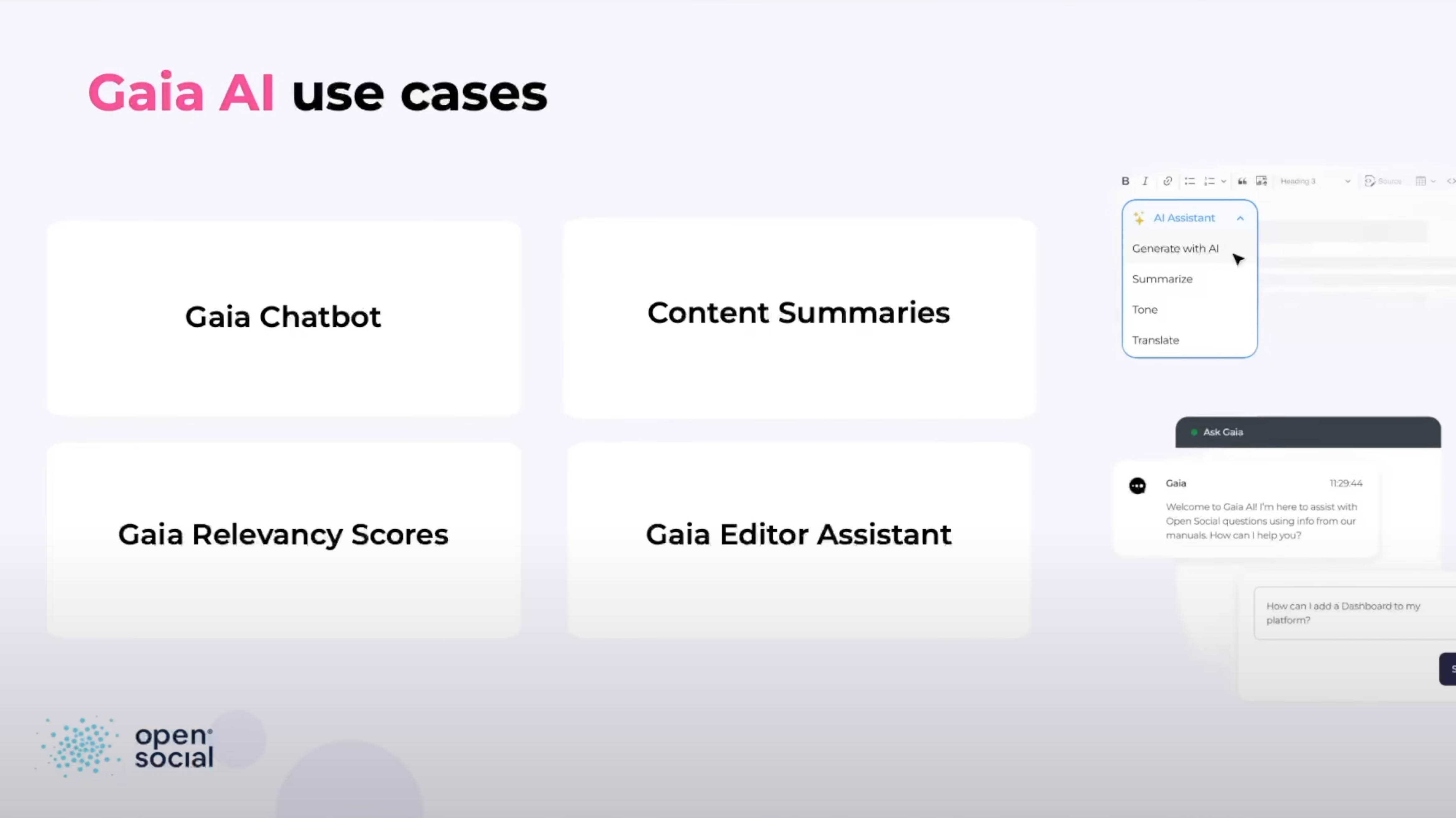
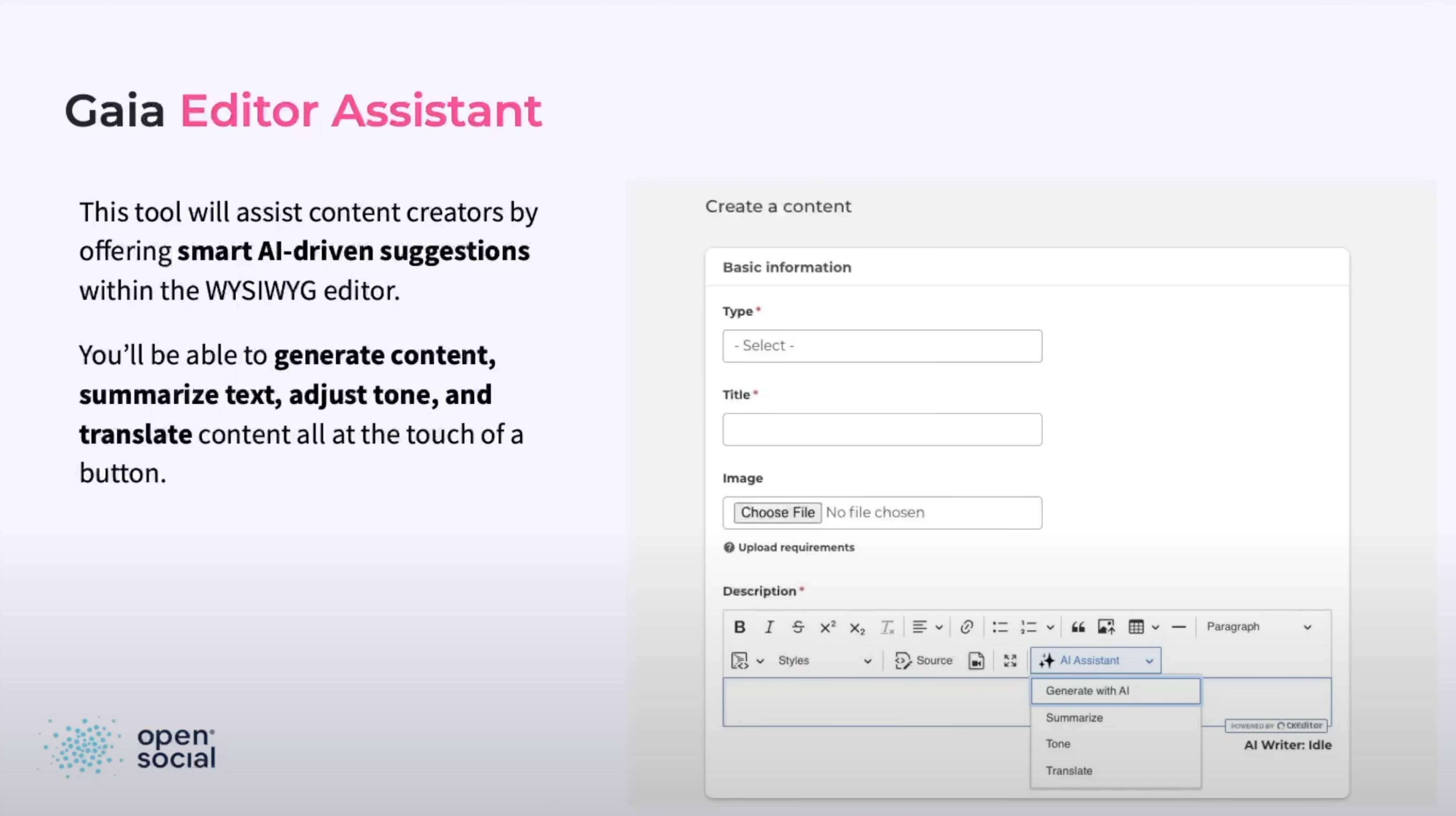
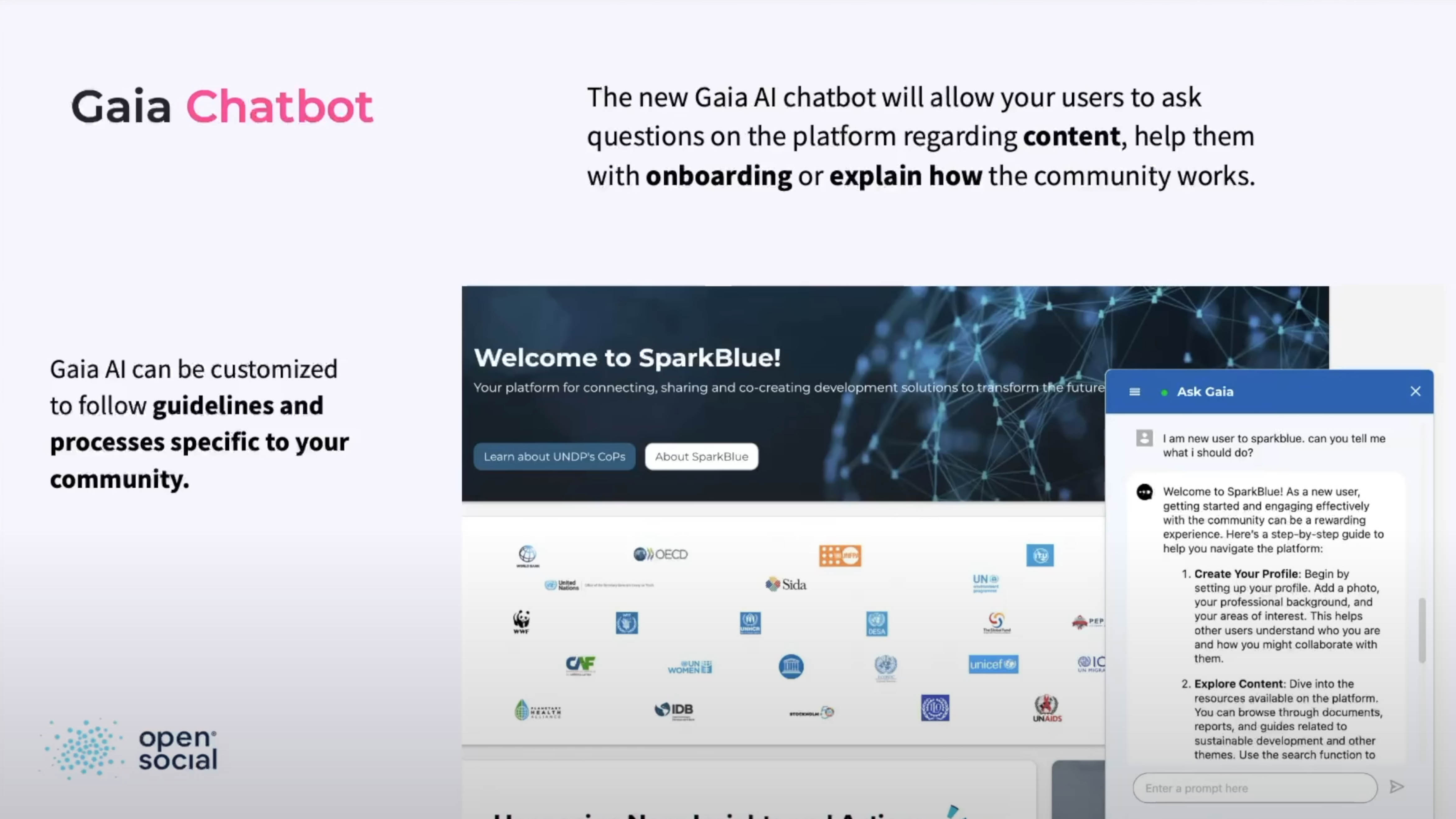
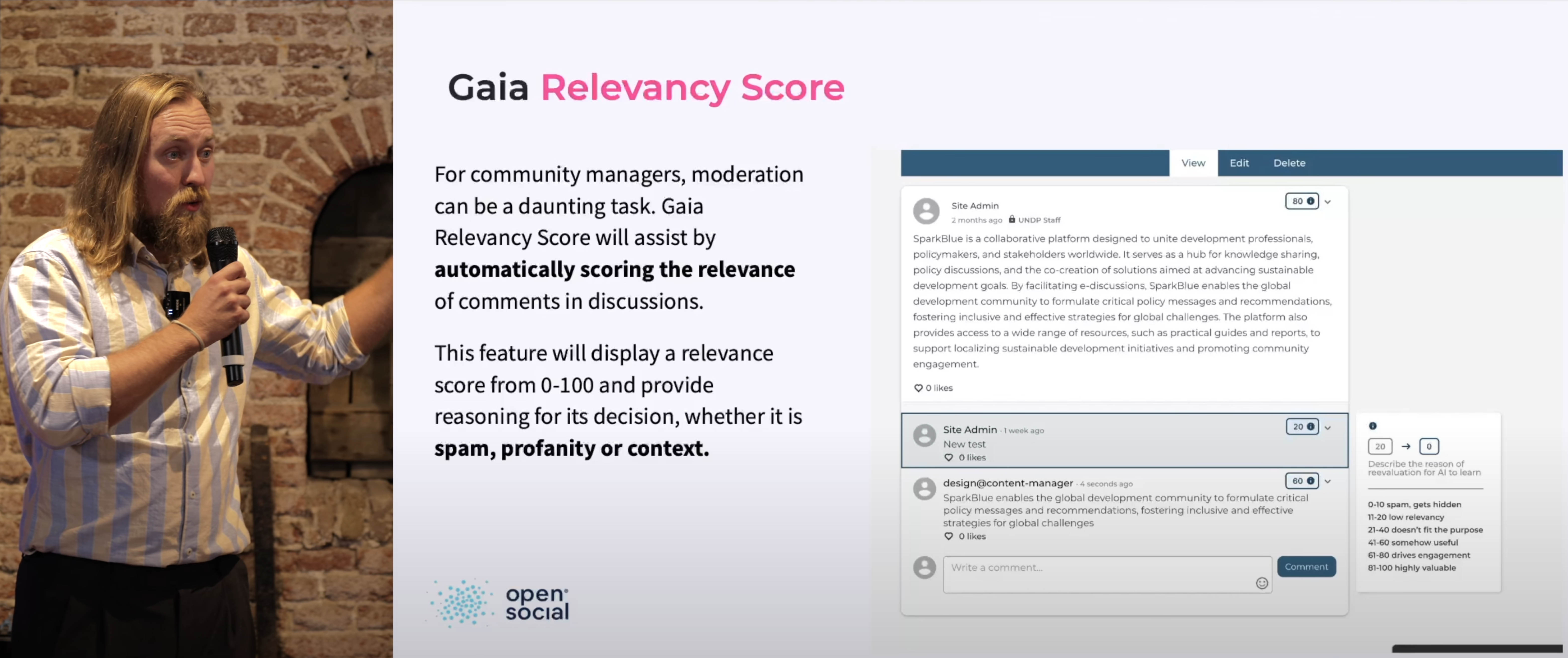
The third pillar is Gaia AI, a suite of assistants designed to support moderation, content discovery and productivity. Moritz explained that AI should not replace the human elements of community work. Instead, it should help reduce the noise and free up time for more meaningful interaction. Gaia AI can summarize long discussions, highlight relevant content or support moderators by identifying posts that may need attention. These functions create a more supportive environment for both members and administrators.
Moritz noted that AI features are developed with strict attention to safety and transparency. Communities depend on trust. If members feel uncertain about how AI is used, engagement suffers. Gaia AI follows clear rules about data use and aims to strengthen rather than undermine the human relationships at the heart of community collaboration. Moritz emphasized that AI should help people make better decisions and access knowledge more easily.
Throughout his talk Moritz showed how these three innovations connect with the broader vision of the Community Collaboration Platform. Engagement Studio focuses on participation. Connection Hub focuses on coherence across tools. Gaia AI focuses on intelligence. Together, they form an ecosystem that supports the full cycle of community collaboration. Members receive guidance, teams work with connected data and knowledge becomes easier to access.
Moritz also discussed how product development at Open Social always begins with real user challenges. The company works with public institutions, associations, global networks and mission-driven organizations. These groups face complex demands. They work with large audiences, sensitive data and strict governance requirements. Their platforms must support secure collaboration and meet high accessibility standards. Moritz explained that these needs shape every design and engineering decision. The goal is to build tools that help organizations achieve their mission with clarity and confidence.
One example he shared involved organizations that rely heavily on communication flows. Without clear onboarding and retention workflows, members often disengage. Engagement Studio offers a way to solve this by turning community building into a structured process. Another example related to integration. Large networks often use CRMs to manage membership data. Without a connection between the CRM and the community platform, information becomes inconsistent. Connection Hub solves this problem by syncing records and keeping systems aligned.
Moritz also addressed how the product team views long-term development. The innovations presented at the Summit are not isolated features. They are part of a bigger architecture that supports interoperability and digital sovereignty. Open Social invests in open standards and clear governance models that help organizations stay independent and follow regulatory requirements. The product roadmap continues to move in this direction by building flexible tools that support both small pilot communities and large international ecosystems.
Toward the end of his talk Moritz reflected on the importance of continuous experimentation. Communities evolve. Technology evolves. Organizations face new challenges. Product development must follow these changes and support teams at every step. Moritz emphasized that the future of Open Social is shaped by conversations with partners and customers who bring real-world insights and needs. Feedback drives decisions and helps the team refine features in ways that create measurable value.
He closed with a call to think about community platforms not as static spaces but as living ecosystems. Engagement, integration and intelligence form the connective tissue that helps those ecosystems thrive. Open Social’s product direction is built on that understanding. It aims to create an environment where people can contribute, learn and coordinate without obstacles.
Moritz’s talk made it clear that successful community collaboration depends on strong foundations. By introducing Engagement Studio, Connection Hub and Gaia AI, he offered a practical vision for how organizations can strengthen participation and connect their digital tools in a more coherent way. His insights showed how thoughtful product design shapes the future of collaborative work and supports communities that want to make a real impact.
Related articles
You might find this interesting too.

Connect. Collaborate. Thrive.