
Open Social Summit
Designed for digital sovereignty: the making of Open Social's new Document Collaboration Suite
.jpg)
During the Open Social Summit Victoria Vorobiova offered a look into one of the most important developments within the Community Collaboration Platform. As Design Lead at Open Social she introduced the new Document Collaboration Suite and explained how design thinking shapes the way teams work together in digital environments. Her talk showed that effective collaboration is not only about tools. It is about creating experiences that feel natural, simple and aligned with the needs of the people who use them.
Victoria began by pointing out a reality that many organizations face. Teams often work across several tools that do not connect well. Files move between inboxes, cloud drives and shared folders. People lose track of versions or spend time searching for the latest document. These small friction points slow down collaboration and interrupt the flow of work. When communities depend on shared documents for planning, learning and decision making, these obstacles become even more visible. Open Social wanted to remove that friction and bring documents into the center of collaboration.
The Document Collaboration Suite was developed with this goal in mind. Victoria described how the suite allows members to create, edit and organize documents directly inside their community environment. It removes the need to switch between platforms and keeps content, conversations and context together. The suite supports real-time co-editing, comment threads and structured organization. These features help distributed teams stay aligned and reduce the risk of lost files or confusion.
A central theme in Victoria’s presentation was the role of design in shaping meaningful collaboration. She outlined three principles that guided the development of the suite. The first is simplicity. Tools should help people work without demanding extra cognitive effort. Clear layouts, familiar patterns and intuitive navigation create a sense of confidence. When people understand how to use a tool immediately, they spend more time focusing on the task and less time figuring out the interface.
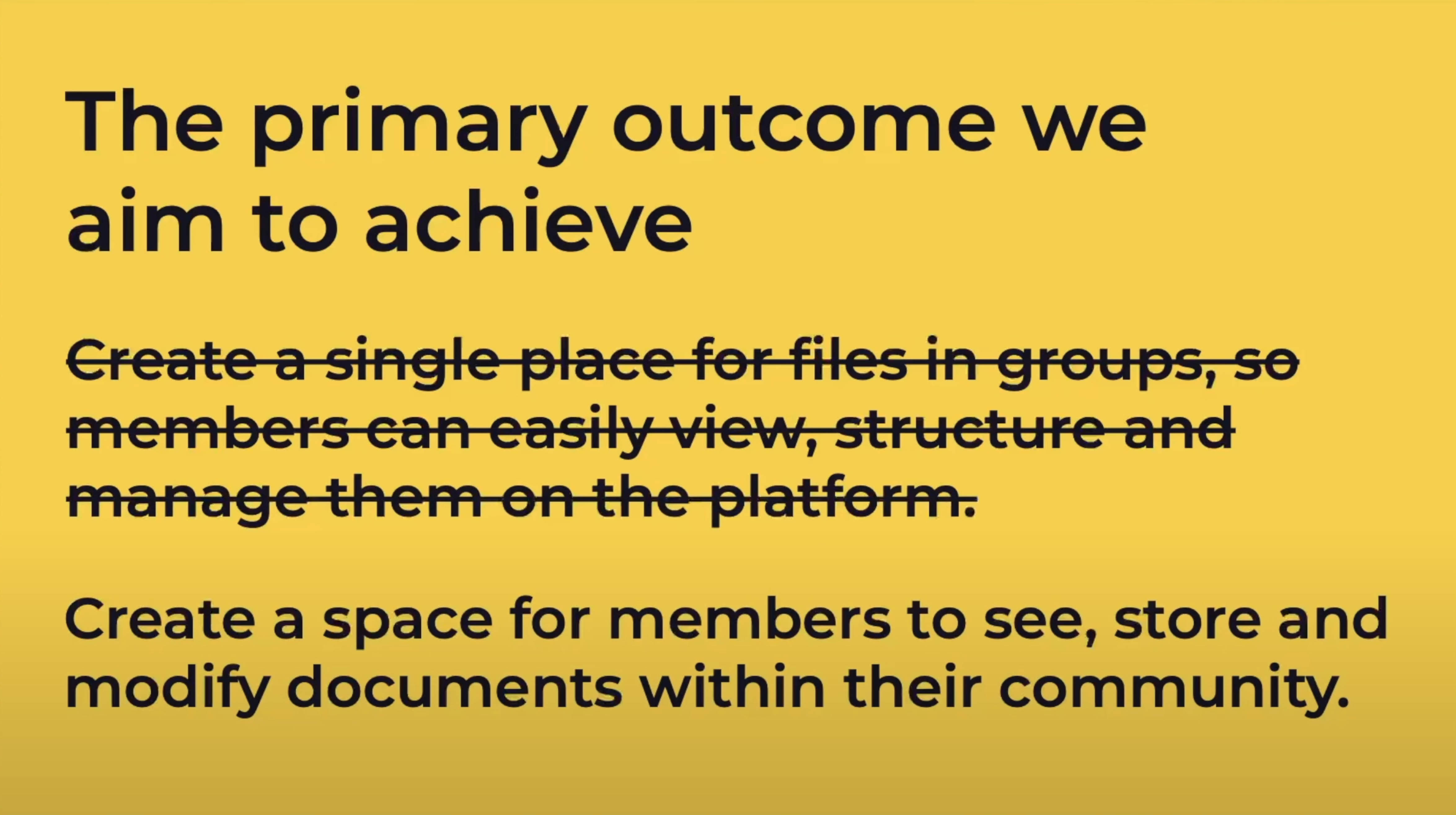
The second principle is familiarity. Rather than forcing users to adapt to new workflows the suite reflects patterns people already know from document editors, shared drives and messaging tools. Victoria noted that good design does not try to reinvent basic interactions. It supports them in a cleaner and more coherent way. By combining established expectations with a unified environment, the suite keeps learning curves low and makes collaboration smoother.
The third principle is inclusivity. Communities are made up of people with different roles, levels of technical comfort and access needs. A well-designed tool must support everyone. Victoria described how the suite respects accessibility standards and offers clear permission settings that let organizations manage who can view or edit each document. These features help larger networks work together without creating bottlenecks or security concerns.
Victoria also shared insights into how design evolves across the platform. The Document Collaboration Suite is not a standalone feature. It is part of a much broader ecosystem. The suite integrates with Engagement Studio, Lumina Insights and the Connection Hub. It fits naturally into the workflows teams already use to run discussions, coordinate projects and analyze engagement. By keeping design consistent across these tools Open Social strengthens the experience for members who move between different parts of the platform during their work.
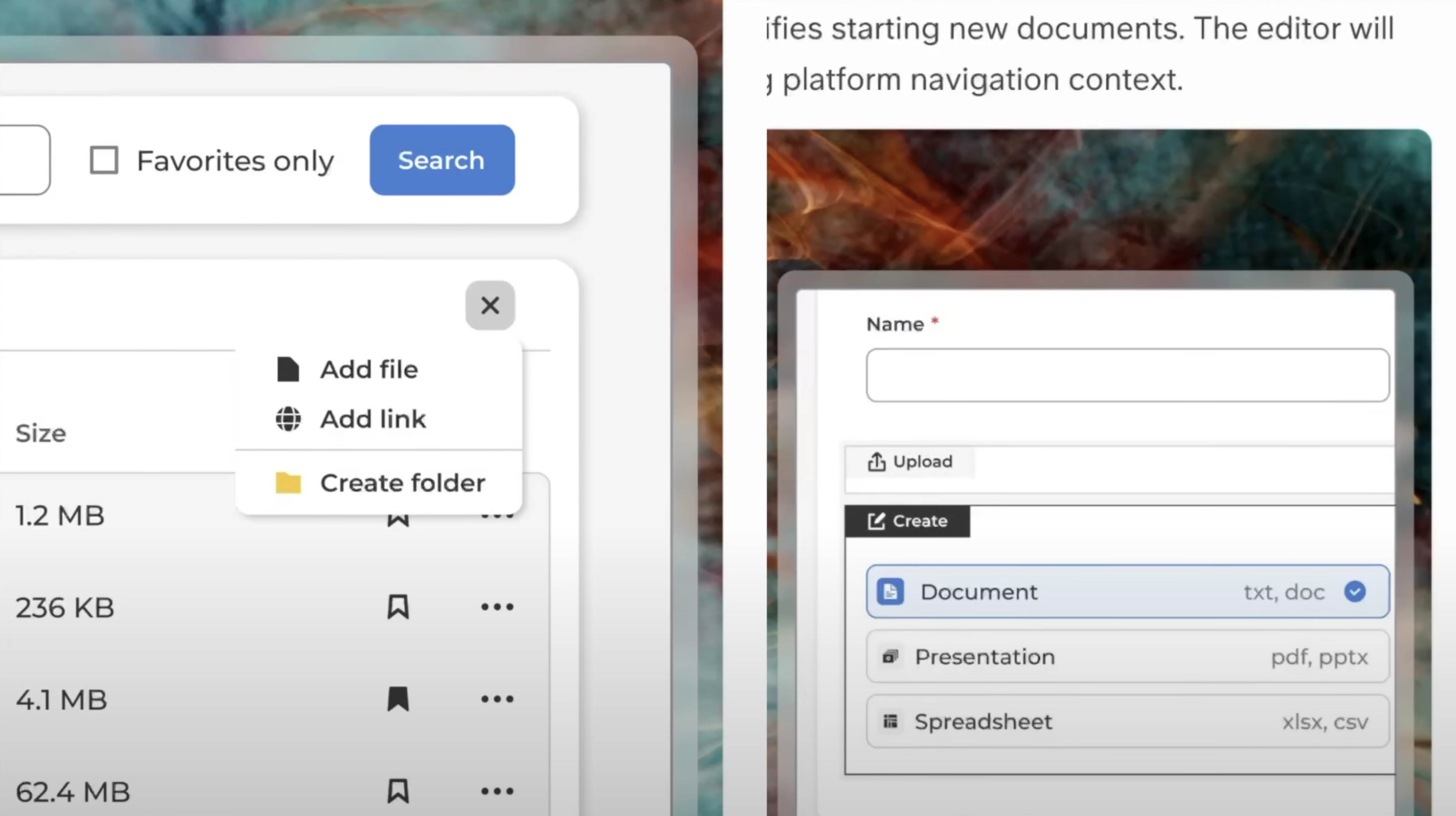
She highlighted how the collaboration with Collabora Online helped shape the technical foundation for the suite. Collabora brings powerful open source editing capabilities that support everything from text editing to spreadsheets and presentations. Open Social wrapped this technology in a user-friendly interface and added secure access management that aligns with strict data sovereignty standards. The result is an environment where documents stay safe without sacrificing ease of use.
Throughout her talk Victoria referred to real examples from the organizations Open Social supports. International teams often work across time zones, languages and cultural contexts. Clear design becomes essential for keeping everyone aligned. When a member joins a document or a project space they should be able to understand what is happening and how to contribute. A good design system not only supports tasks but also reinforces a sense of belonging and clarity. Victoria explained that this is why design choices extend beyond colors or icons. They influence how teams communicate, create and move together.
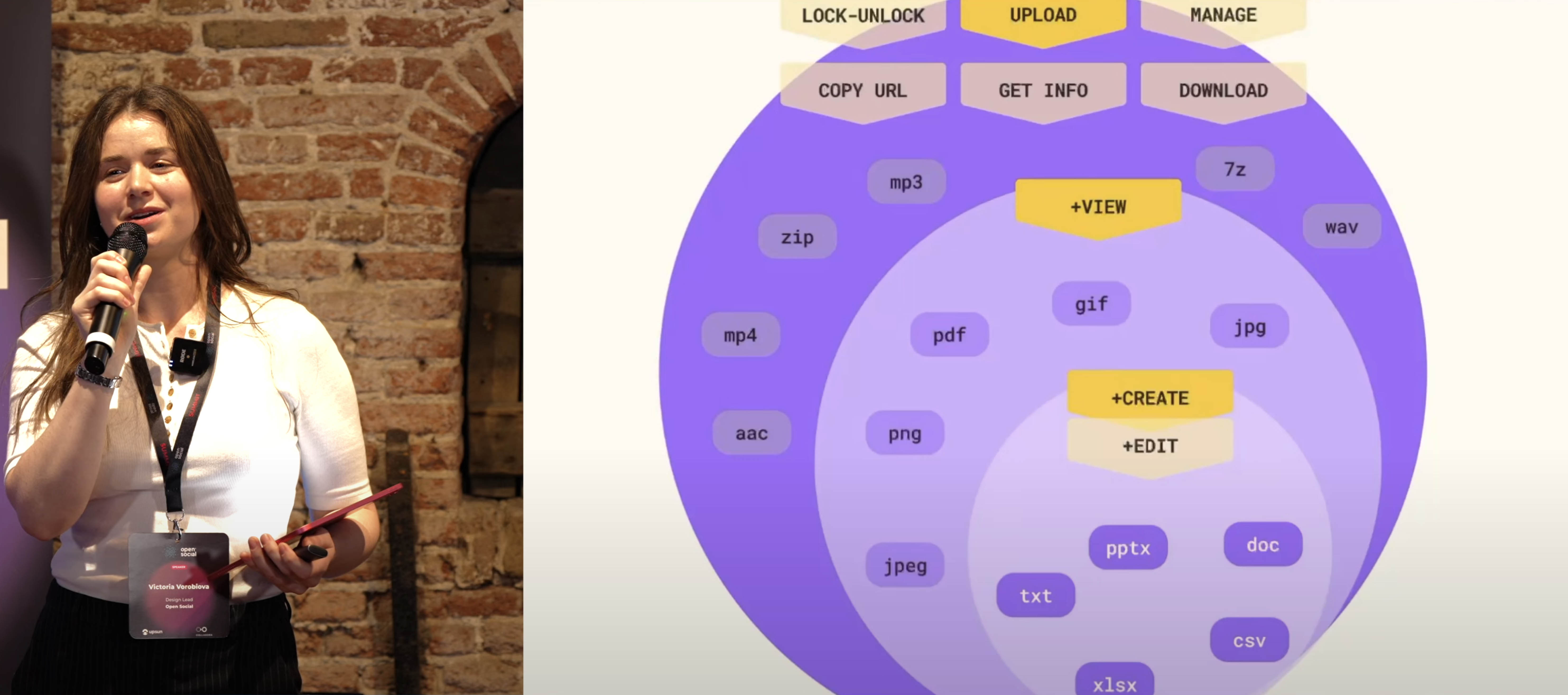
Another part of Victoria’s presentation focused on the workflow improvements the suite enables. When documents and discussions live in the same place staff do not need to chase information across tools. They can see comments, edits and updates in one view. They can track how files evolve over time and use versioning to manage changes. These improvements save time and reduce friction for both moderators and participants. For organizations with complex governance structures these features provide the transparency needed for decision making.
Victoria also highlighted the role of continuous feedback from users. Design is never finished. The suite has already gone through several iterations based on needs shared by customers in public institutions, associations and global networks. As collaboration evolves, the design will evolve with it. Victoria stressed that listening to users is a core part of Open Social’s product philosophy. The best ideas often come from real teams solving real problems.
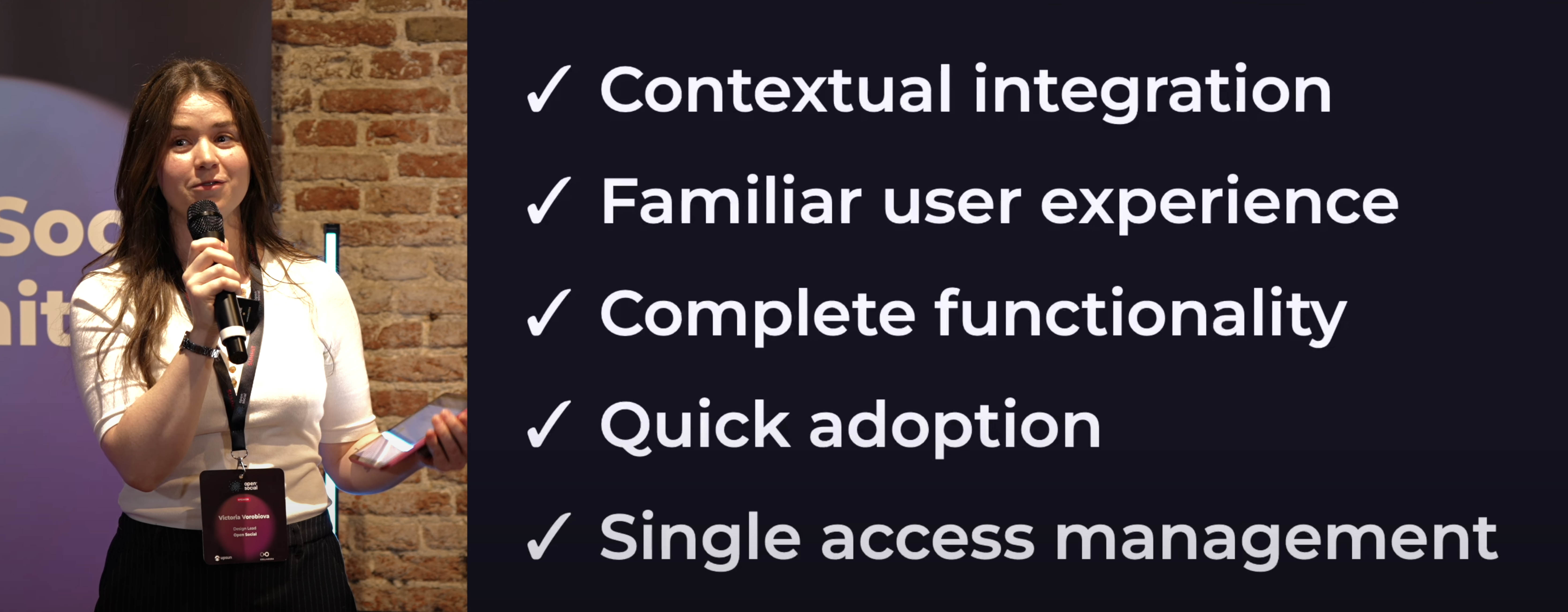
She ended her talk by connecting design to a wider purpose. Tools do not create collaboration. People do. Design supports those people by giving them clarity, structure and a sense of ease. When communities work inside a well-designed environment, they share ideas more openly and move through tasks more confidently. The Document Collaboration Suite is built to support that experience and reflects the broader direction of Open Social. It aims to bring communication, creation and decision-making into one place where teams can work together with focus and trust.
Victoria’s talk reminded the audience that design is not decoration. It is a crucial part of building digital spaces that help communities succeed. With the Document Collaboration Suite, Open Social continues to expand the foundation that enables organizations to collaborate with purpose and agility. The suite connects the technical vision of the platform with the human side of teamwork, helping members create, learn and coordinate in a more connected way.
Related articles
You might find this interesting too.

Connect. Collaborate. Thrive.