
Open Social Summit
Inside the Erasmus+ community strategy: methodology, playbook and best practices
.jpg)
At the Open Social Summit Erik Ballhausen offered a clear and thoughtful exploration of how multi community ecosystems can strengthen collaboration at scale. As an ICT Advisor at the European Commission he works closely with teams who manage complex networks of experts, policymakers and practitioners. His talk focused on the lessons learned from these networks and the role digital platforms play in connecting people across institutions and domains. Erik’s message highlighted that although technology shapes how communities work, the foundations of collaboration remain deeply human.
Erik opened his session by returning to ideas from Etienne Wenger whose work on Communities of Practice continues to influence the way organizations approach knowledge sharing. The core principles that Wenger introduced more than two decades ago remain relevant today. People gather around a shared purpose. They develop a common language and practice. They learn together through participation. Erik noted that these ideas continue to guide how the European Commission and many other institutions structure their collaboration efforts in a digital context.
The shift toward digital platforms adds both opportunities and challenges. Communities are no longer confined to one office or one city. They operate across borders, time zones and administrative structures. They also rely on different tools that often do not communicate with one another. Erik explained that knowledge work becomes more difficult when information lives in isolated systems. Duplication increases and teams cannot easily learn from previous work. This is why interoperability has become a central priority for the Commission. Communities need to exchange information across departments and projects in ways that respect privacy and governance rules while reducing operational friction.
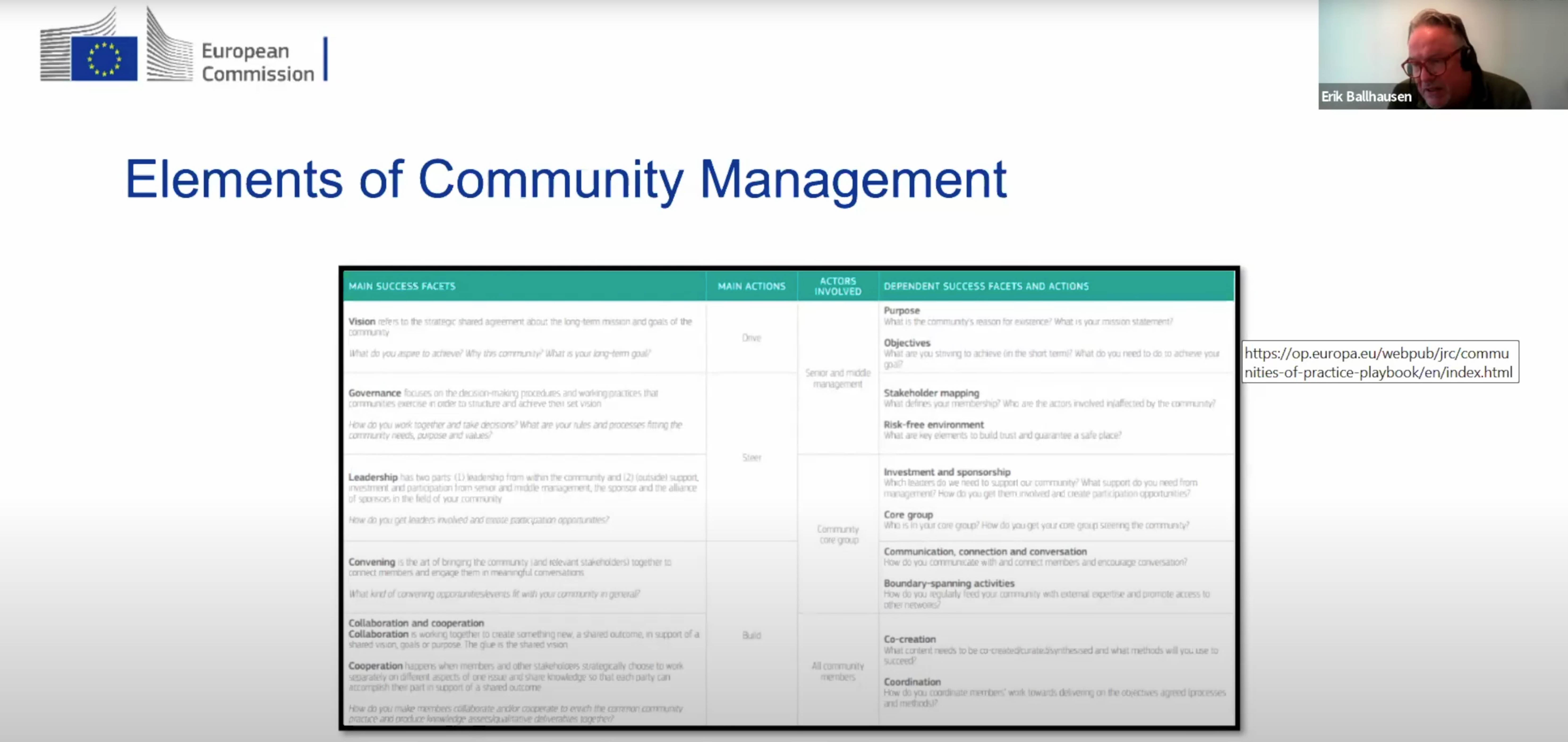
Erik described how the Commission’s communities have grown beyond simple discussion spaces. They are now ecosystems with multiple layers of activity. Some groups focus on policy coordination while others support research, capacity development or project execution. These layers overlap and influence one another. A platform must support this complexity without overwhelming users. According to Erik the aim is not to force everything into one uniform structure. Instead the aim is to create an environment where communities can stay connected and discover each other’s work.
One of the examples Erik highlighted is the effort to connect communities across different Directorate Generals. Each group may use different methodologies and vocabulary, yet they often work toward related goals. A multi community ecosystem helps them identify synergies and avoid repeating earlier work. It also allows successful methods or tools to spread across the institution. Erik noted that digital collaboration becomes far more effective when people can see what others are doing and apply lessons that have already been tested.
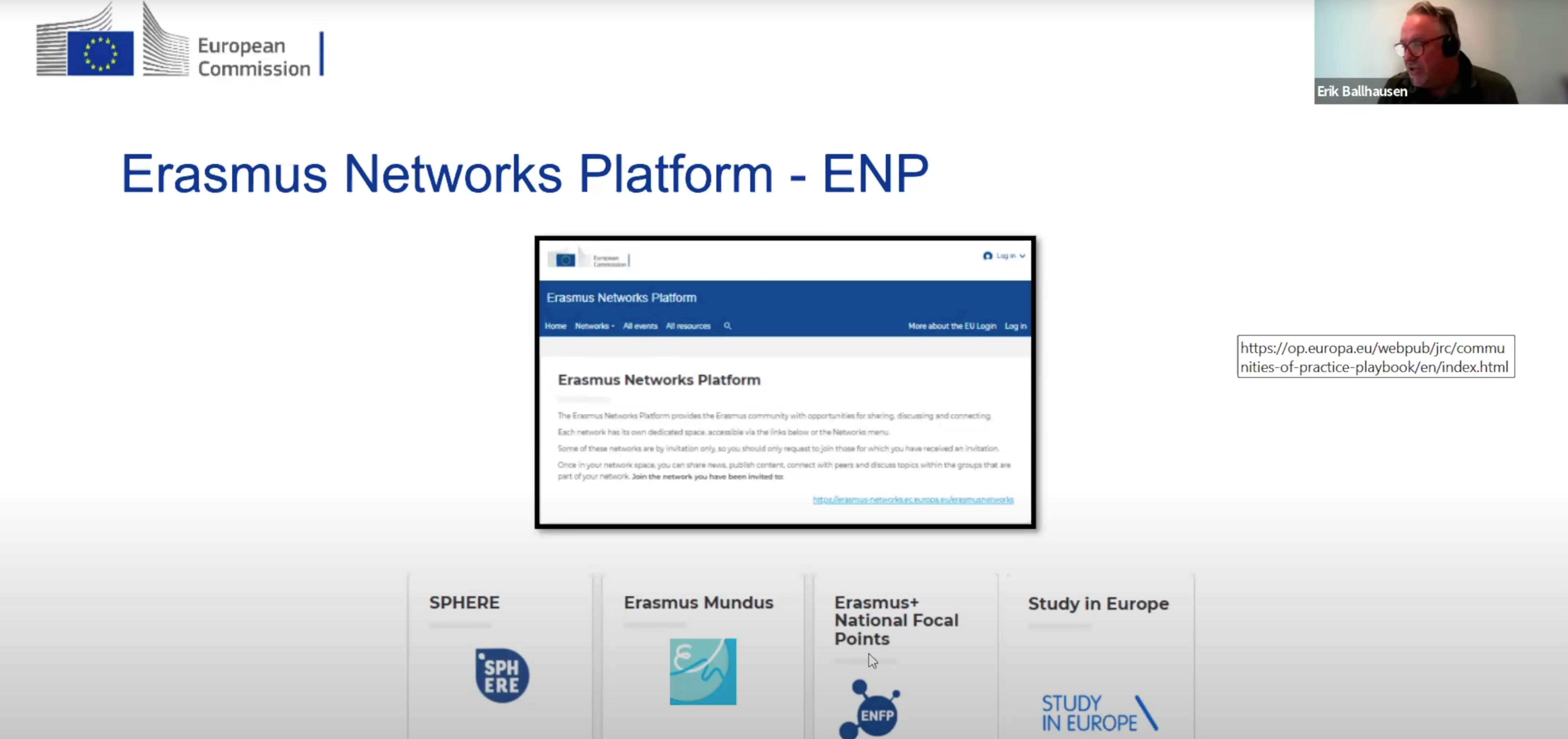
Erik also spoke about the practical side of supporting these ecosystems. Communities need spaces to meet, organize content, share knowledge and coordinate activities. They need roles and structures that help manage participation. They also need systems that capture their learning so that knowledge does not disappear when a project ends or a team member moves on. Erik emphasized that good community platforms combine communication, content management and governance in one coherent environment. They help communities create visible pathways for members and maintain continuity over time.
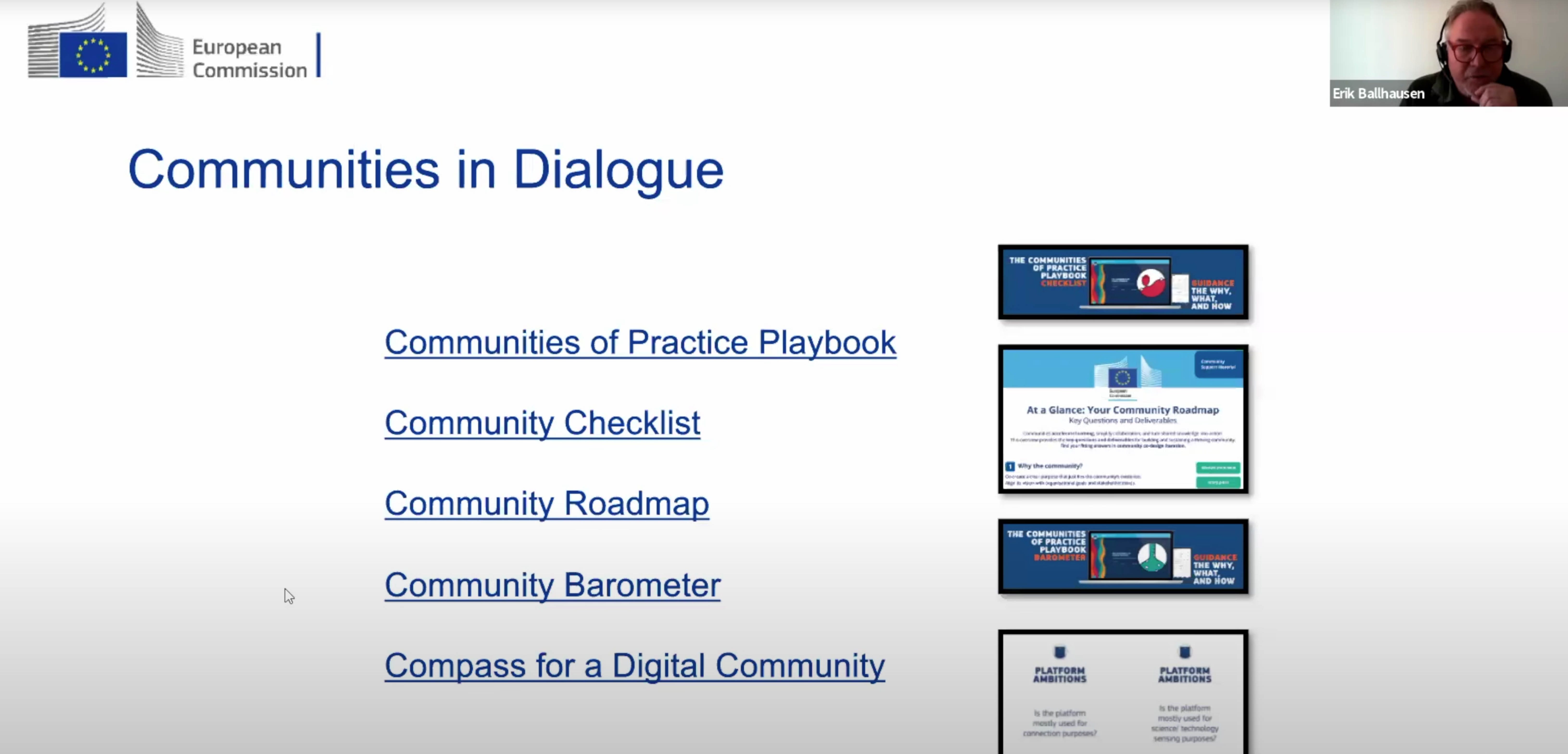
The role of open standards emerged as another key theme in the talk. Open standards allow platforms and tools to communicate. They let organizations exchange data without locking themselves into proprietary formats. Erik stressed that this openness is crucial for public institutions that must ensure future access to their knowledge. When information is stored in formats that may not be accessible in ten years the value of that knowledge decreases. By using open standards, communities protect their long-term investment in learning.
Erik also connected interoperability to the idea of collective intelligence. When communities operate as isolated units, their insights remain limited. When they can share practices, compare approaches and build on the work of others, they create a more powerful form of intelligence. Erik explained that collective intelligence emerges when different perspectives, experiences and data sources converge. Digital platforms play a central role by making this convergence possible daily.
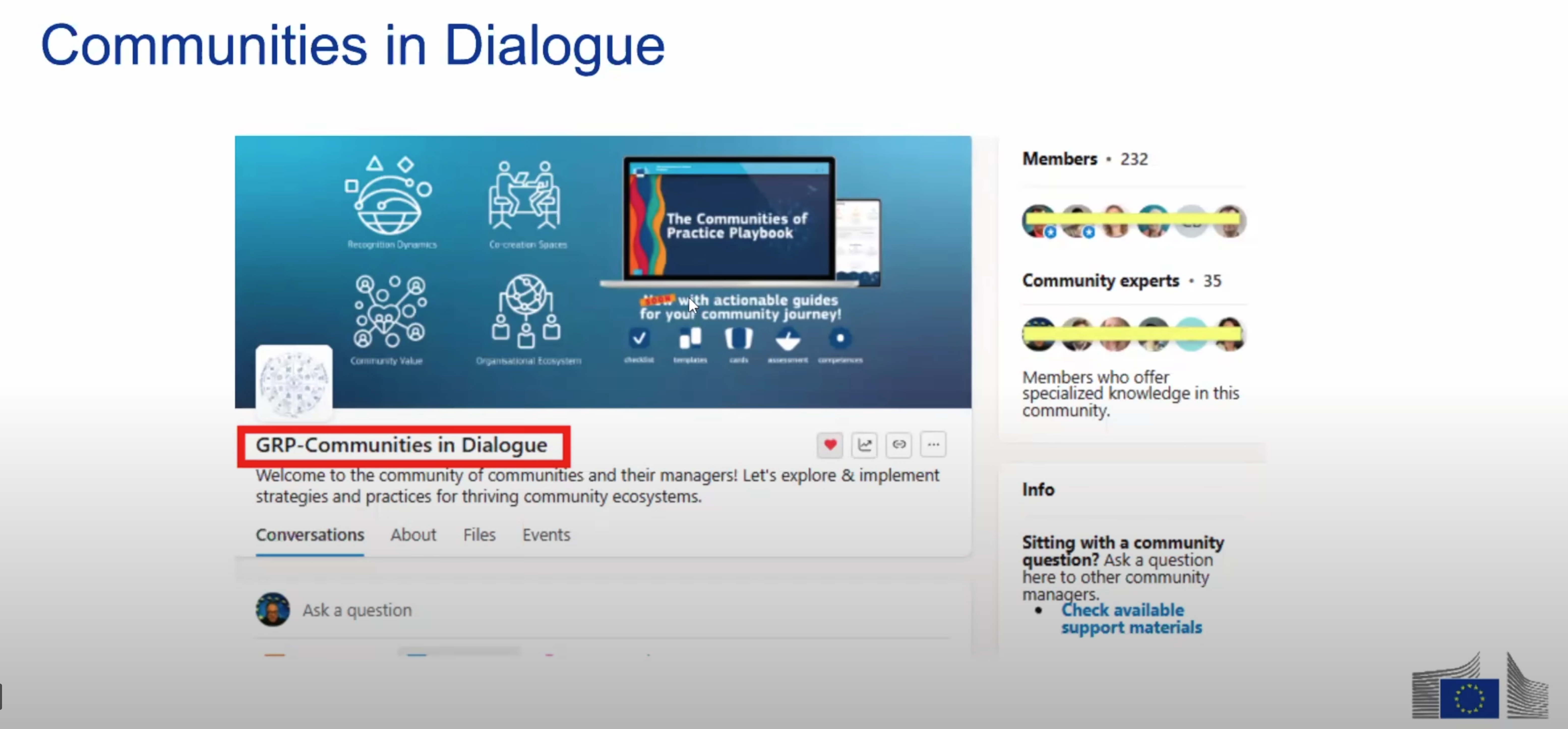
Another part of the talk addressed how communities grow and evolve. Erik noted that many teams begin with small pilot initiatives. They test ideas, explore workflows and build initial engagement. As they mature, they develop clearer structures and more stable participation. The platform must support this growth without becoming rigid. Flexibility is important because each community has its own rhythm and culture. Erik explained that ecosystems thrive when they provide a balance between structure and autonomy. Communities need support but they also need room to adapt the space to their own needs.
Erik also highlighted the importance of clear roles within communities. Successful groups often use community managers, facilitators or coordinators who guide participation. These roles ensure that discussions stay productive and that newcomers can find their way. They help maintain quality and bring continuity to the work. Digital platforms can assist by offering tools that make moderation, content curation and communication easier. However, the human element remains essential.
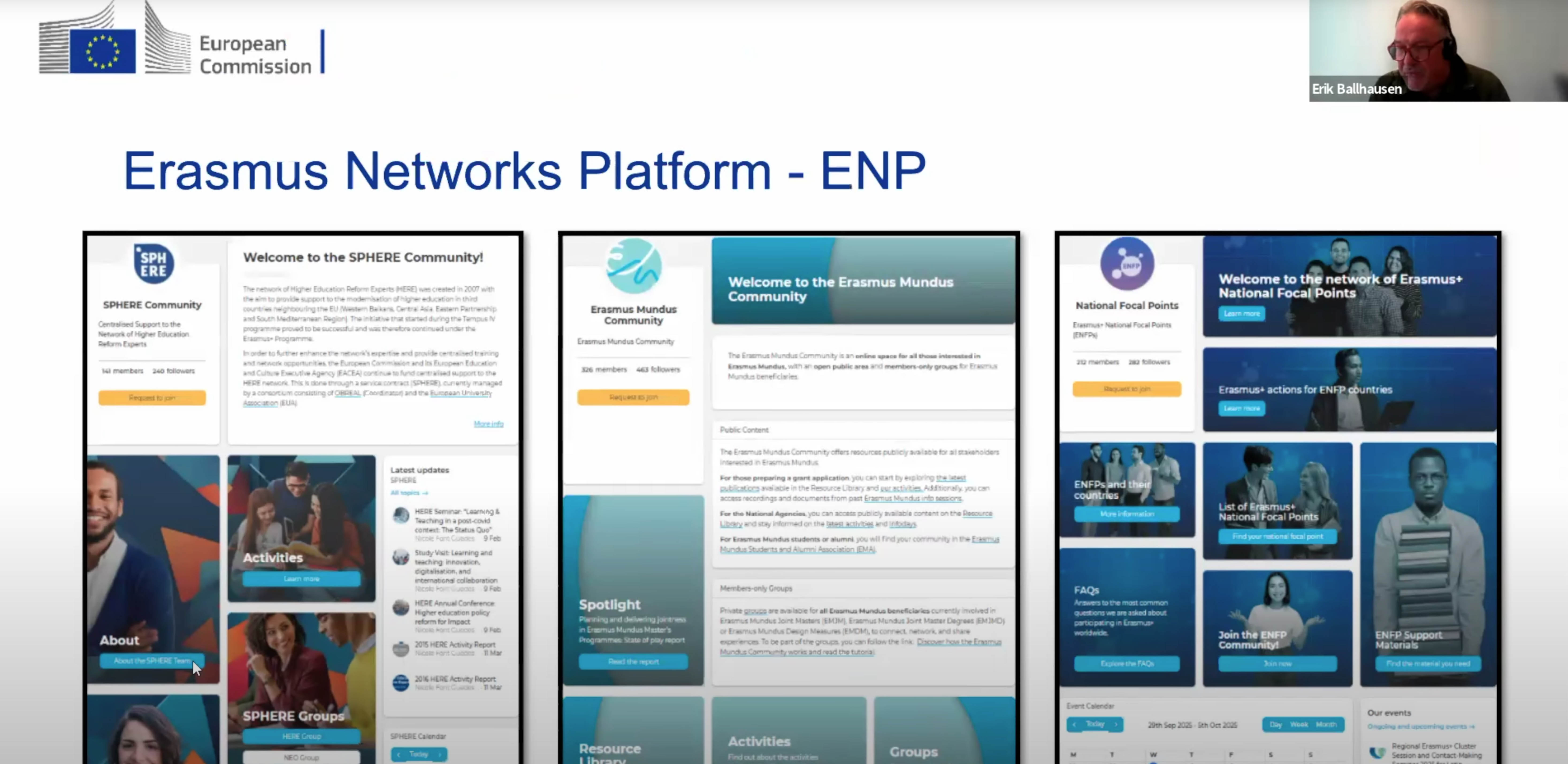
Throughout the talk, Erik connected these ideas to real experiences within the European Commission. He described how different departments work together to align their communities with strategic goals such as policy coherence, knowledge reuse and transparent decision making. The digital ecosystem supports these goals by offering shared workspaces, structured knowledge bases and secure governance models. It ensures that collaboration does not stay within one small group but contributes to broader institutional learning.
Toward the end of his session, Erik emphasized that multi-community ecosystems are not only technical constructs. They represent a cultural shift toward openness, cooperation and shared purpose. Technology can support this shift but it cannot create it on its own. People must see the value of sharing knowledge and participating in wider networks. When they do the ecosystem becomes stronger and more resilient.
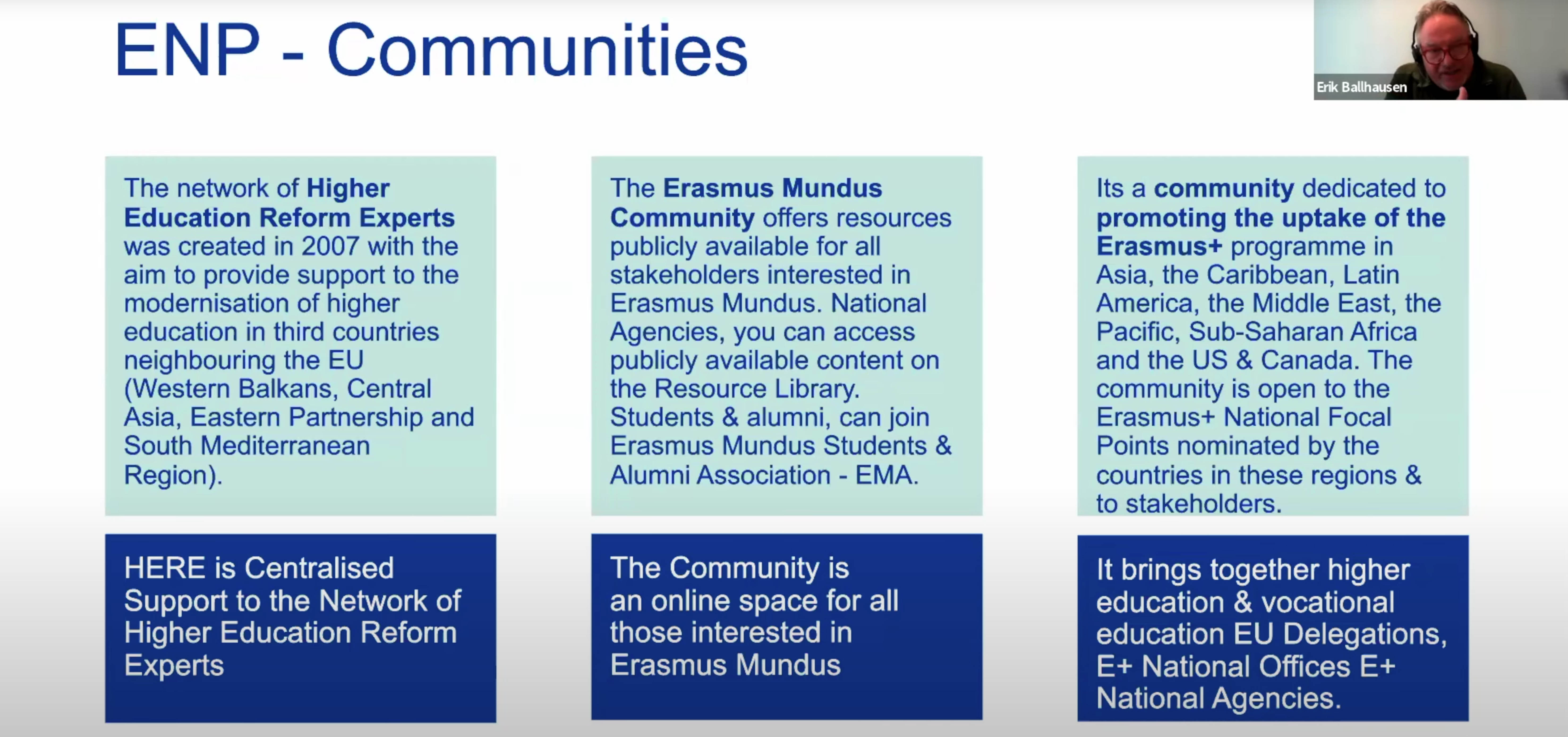
Erik closed with a reminder that building collective intelligence is an ongoing process. There is no final state. Communities grow, adapt and learn over time. Platforms evolve as needs change. The goal is not to create a perfect system but to create one that continues to support meaningful collaboration. His insights offered a clear view of how public institutions can embrace this journey and how open ecosystems can help teams address complex challenges together.
Related articles
You might find this interesting too.

Connect. Collaborate. Thrive.