
Open Social Summit
Sovereign document collaboration in Open Social with Collabora Online
.jpg)
At the Open Social Summit Eloy Crespo presented an important step forward for the future of document collaboration. As VP of Business Development at Collabora he shared how the latest developments in Collabora Online strengthen the way communities create and manage documents inside Open Social. His talk highlighted a shared mission grounded in open standards, digital sovereignty and respect for user control. It also showed how design and engineering come together to create smoother and more secure workflows for organizations that rely on collaborative documents every day.
Eloy opened with a clear message. Organizations need reliable tools for editing documents but they also need independence. Many teams depend on proprietary cloud services that manage data in ways they cannot fully control. Public institutions, international networks and mission driven organizations have stronger requirements. They need to protect sensitive information and align with national or regional regulations. Collabora Online addresses these needs by offering a fully open source alternative based on LibreOffice technology and supported by a strong community of contributors.
According to Eloy the collaboration between Collabora and Open Social reflects shared values and complementary strengths. Open Social provides a community environment where people meet, exchange ideas and coordinate. Collabora provides the editing engine that lets them work on documents directly inside that environment. Putting the two together reduces friction and makes collaboration more coherent. Members no longer need to move between external platforms or lose track of versions. Everything stays within one secure and structured space.
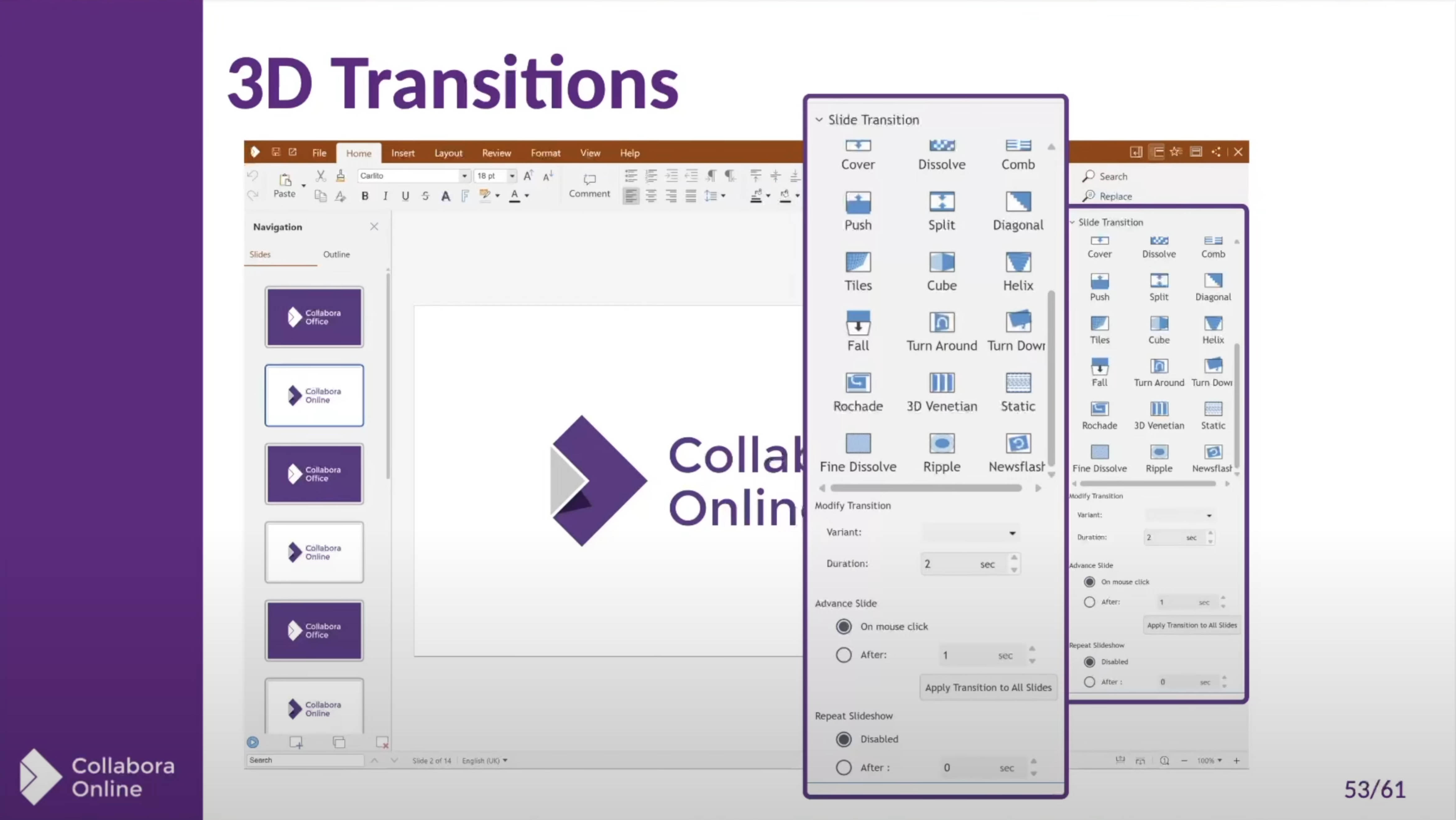
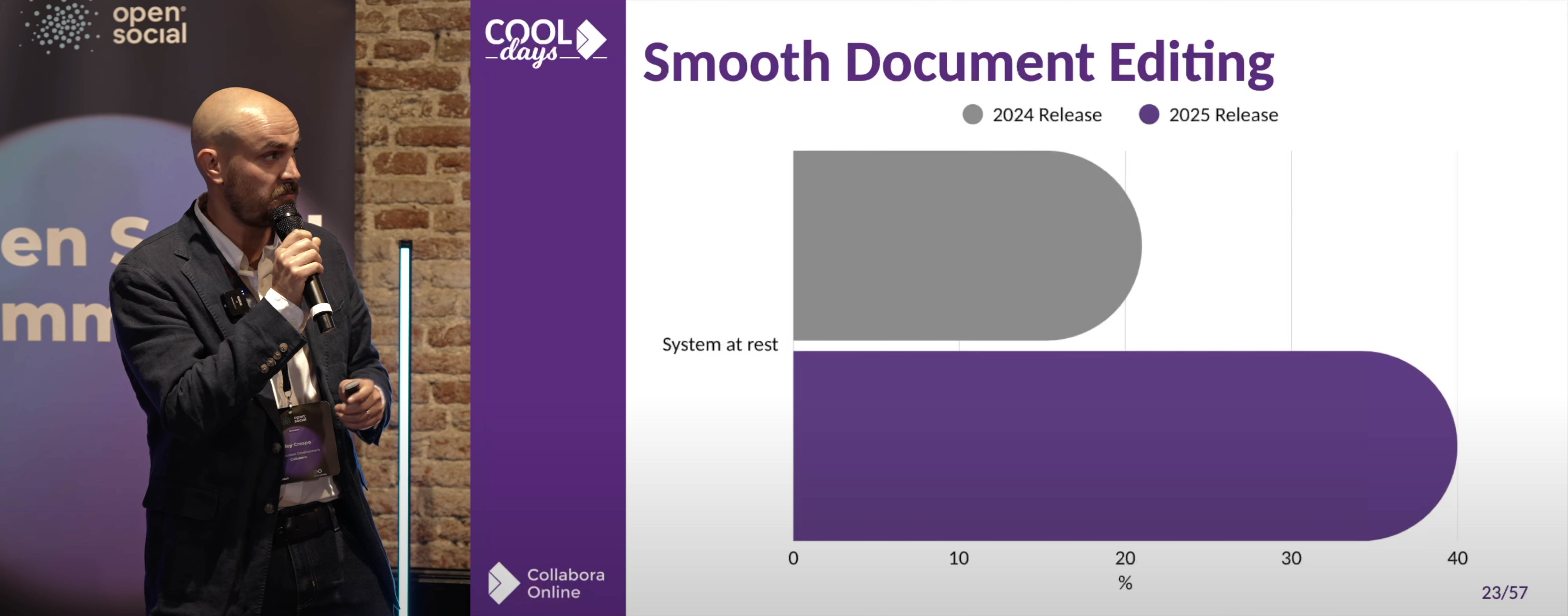
Eloy walked the audience through several major improvements in the newest version of Collabora Online. One of the most notable is a faster and smoother editing experience. The interface has been redesigned to feel cleaner and more responsive. Actions are easier to find and the layout focuses attention on the content rather than the controls. These enhancements help members stay focused and reduce frustration during long editing sessions.
Another key improvement is the introduction of on-selection edits. This feature allows users to apply formatting or actions directly to highlighted text or objects without navigating through multiple menus. Eloy explained that this design choice came from closely studying user behavior. People want to make changes quickly and in context. By simplifying these interactions, Collabora reduces the time needed for routine tasks and helps teams work with more confidence.
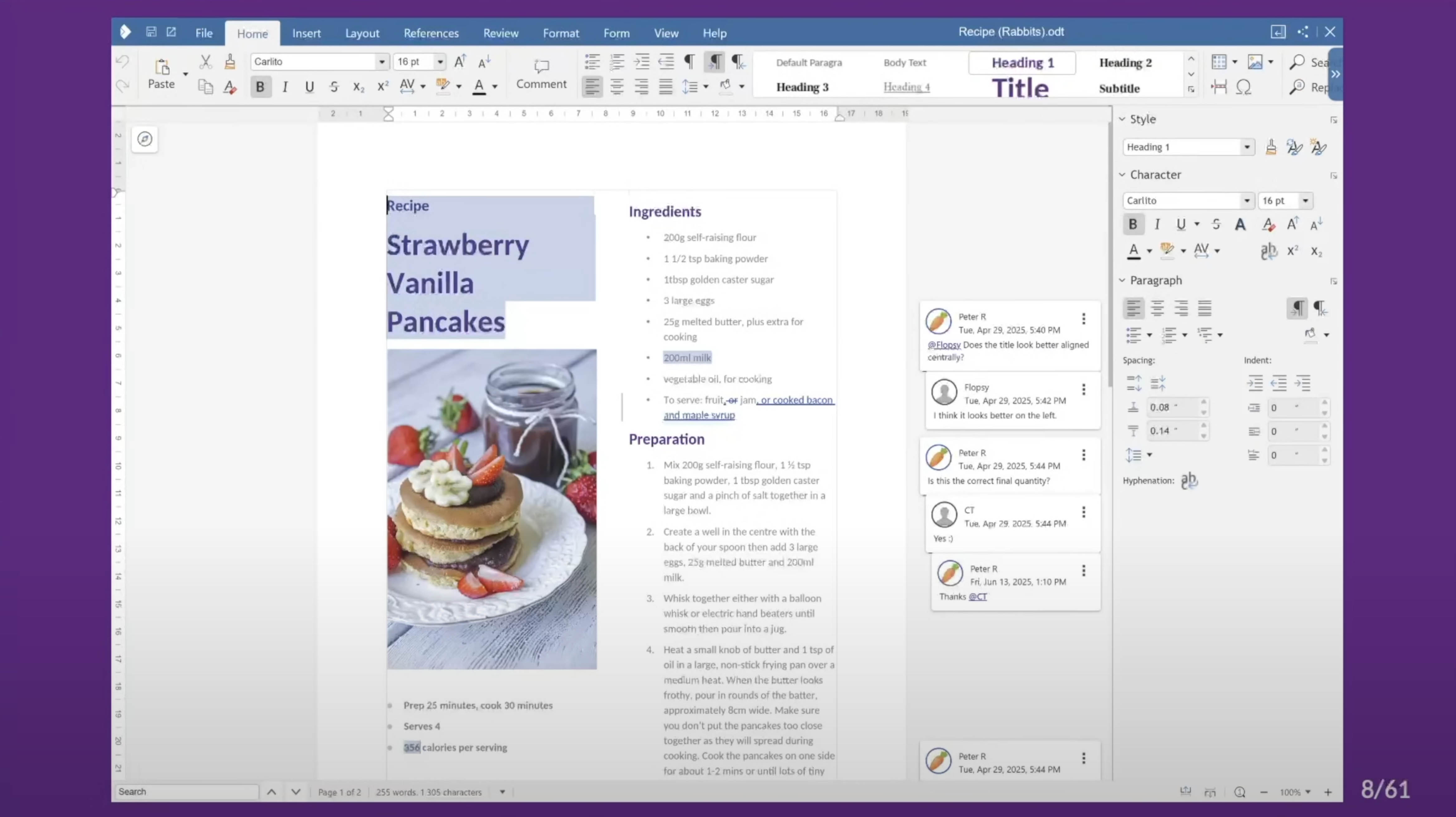
Eloy also presented the expanded system for comments. Collaboration often depends on clear and structured feedback. The new comment system supports replies, mentions and nested discussions. This gives teams the ability to run full review cycles inside the document itself. It also keeps conversations organized and reduces the risk of losing context across emails or chat threads. When teams work across different time zones, this structure becomes even more valuable.
Another important addition is secure digital signing. Eloy emphasized that many organizations require formal approval processes for reports, agreements or policy drafts. Collabora Online now supports digital signatures that meet high security standards. This allows teams to complete their workflows without exporting files or relying on external tools. It helps them maintain a clear chain of trust from creation to final approval.
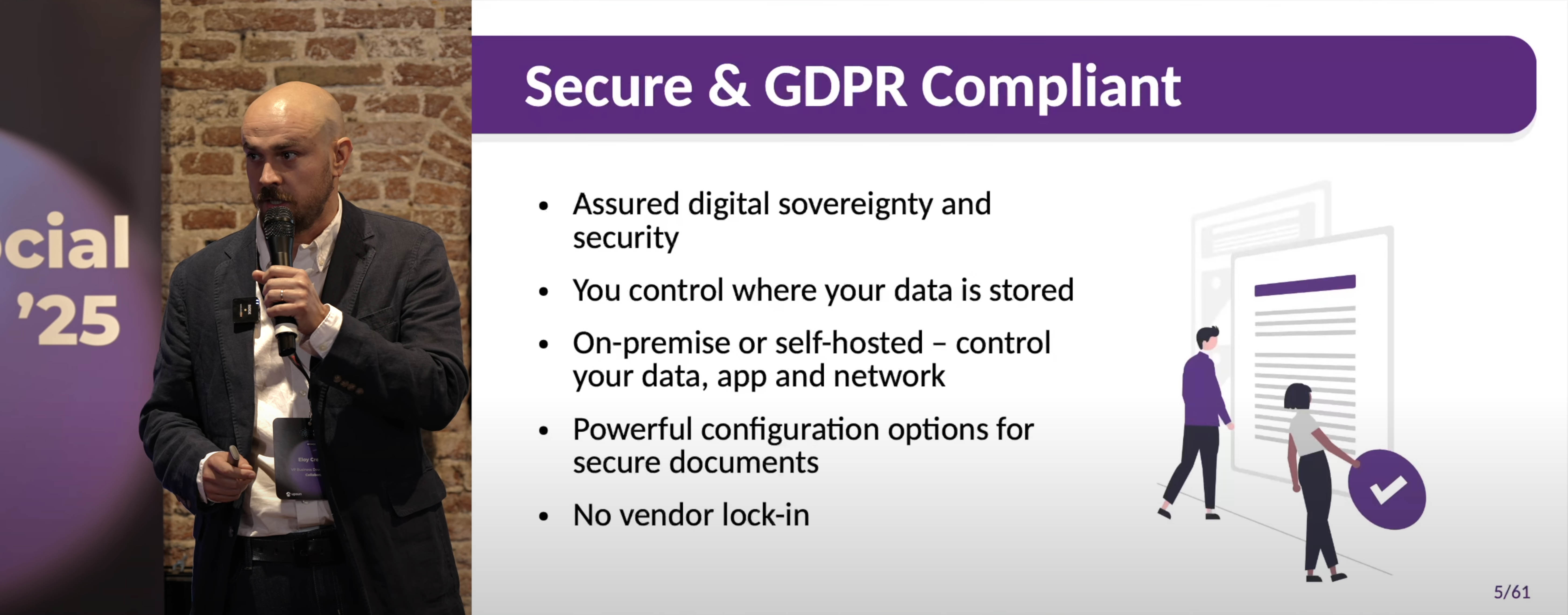
Throughout the talk Eloy stressed that all these improvements are designed without sacrificing control or privacy. The platform can be self-hosted, which means organizations can keep their documents on their own servers or within trusted infrastructure providers. This flexibility aligns with the values shared between Collabora and Open Social. Both companies believe that organizations should have ownership of their data and should not depend on commercial vendors for basic operations.
Eloy explained that this principle of openness also supports long-term sustainability. Open source software can adapt to new requirements because it is built on transparent standards. Teams can modify or extend the technology to suit their specific needs. As digital collaboration evolves, organizations will not be locked into one vendor or forced to migrate their information. Open standards give them the freedom to grow and experiment.
He also highlighted the importance of interoperability. Collabora Online works with common document formats like ODT, DOCX, XLSX and others. This makes it easier for organizations to exchange files with partners who use different tools. It also ensures that documents remain accessible over time. Interoperability protects the valuable knowledge communities create and prevents them from losing information as technologies change.
Eloy connected these technical developments to the broader mission of empowering people to work together more effectively. When teams face fewer obstacles, they can focus on the content of their collaboration rather than the mechanics of editing. A well-designed document tool supports creativity, shared decision-making and collective ownership of work. It also helps communities run smoother processes, whether they are writing reports, planning events, or developing policy documents.
He also noted that good collaboration tools must support many different types of users. Some people are highly technical, while others only work with documents occasionally. Collabora Online aims to offer a familiar environment that meets the expectations of people used to traditional office suites. At the same time, it offers advanced features for power users who need more control. This flexibility is essential for large communities with diverse roles and responsibilities.
Toward the end of his talk Eloy reflected on the long partnership between Collabora and Open Social. The two organizations share a commitment to transparency and user empowerment. They also share a belief in the importance of digital sovereignty for public and mission-driven institutions. The integration of Collabora Online into the Community Collaboration Platform is a practical expression of that philosophy. It gives organizations a reliable and independent way to manage their documents while staying aligned with strict privacy and regulatory standards.
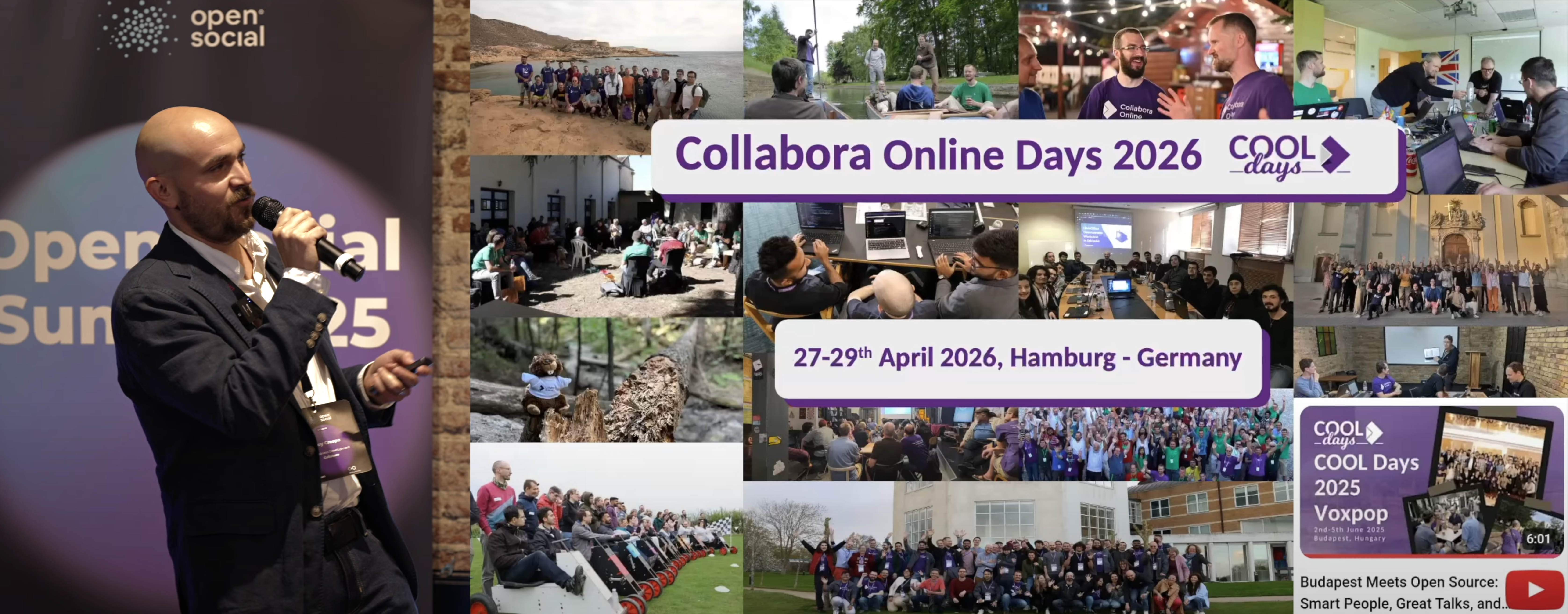
Eloy closed by encouraging organizations to explore the new features and think about how they can strengthen their internal processes. The improvements in Collabora Online are not abstract enhancements. They directly support the everyday work of teams that depend on clarity and trust in their tools. By focusing on responsiveness, secure signing, structured feedback and open standards, the platform enables a more productive and resilient form of collaboration.
His talk reminded the audience that document editing is more than a technical task. It is a form of communication and a foundation for collective action. The updates to Collabora Online and its integration into Open Social help ensure that this foundation remains strong, open and aligned with the values that many organizations hold. It reflects a future where collaboration is not only smoother but also more responsible and secure.
Related articles
You might find this interesting too.


Connect. Collaborate. Thrive.